Seamless vs Cut-and-Sew Cotton Activewear Fit Comfort Guide
For activewear brands, the choice between seamless and cut-and-sew cotton activewear is not just a style decision. It affects fit, comfort, sampling, production planning, durability, and how clearly a product matches its intended activity. This guide explains the practical trade-offs so product teams, buyers, and brand founders can choose the right construction method for seamless workout clothes, cotton yoga pants, cotton gym outfits, and broader activewear for women.
What actually changes when cotton activewear is seamless instead of cut-and-sew?
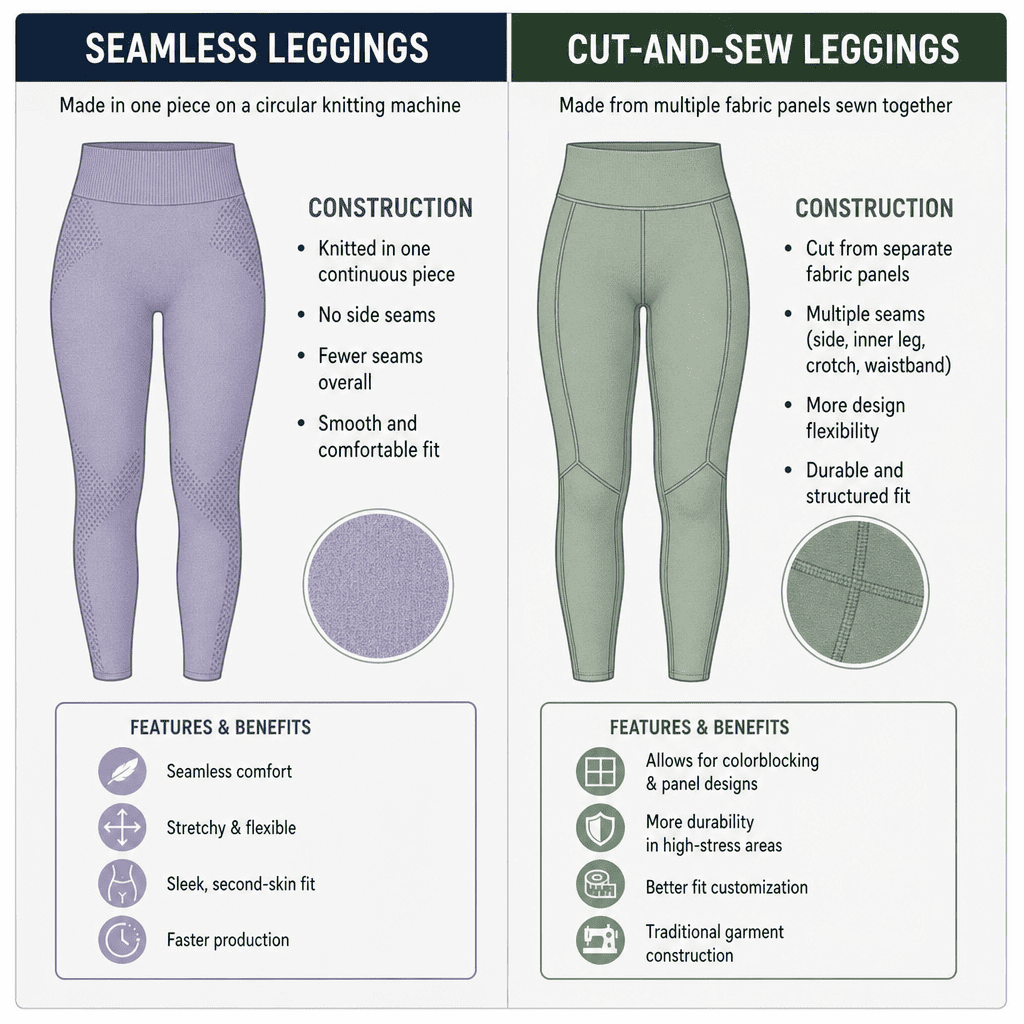
Seamless cotton activewear is generally made by knitting the garment, or major parts of the garment, into a near-finished shape with fewer stitched seams. Cut-and-sew activewear is made by cutting fabric panels from yardage and stitching those panels together. That difference changes how the garment stretches, where pressure sits on the body, how much structure can be built in, and how efficiently a brand can customize details such as panels, pockets, waistbands, trims, and color blocking.
For B2B buyers, this construction choice should happen before design details are finalized. A legging concept that depends on smooth body contouring, minimal seam irritation, and a close second-skin feel may be better suited to seamless fitness wear. A gym outfit that needs strong support, reinforced panels, multiple fabric zones, or a highly specific silhouette may be easier to execute through cut-and-sew production.
Cotton adds another layer to the decision. It is valued for softness, familiarity, and everyday comfort, but cotton behaves differently from many synthetic performance yarns. It can feel breathable and skin-friendly, yet it may also hold more moisture than technical fibers. That means cotton activewear needs careful decisions around fabric weight, stretch recovery, yarn blending, washing performance, and intended use.
Construction method shapes the entire product experience
A seamless garment is usually associated with smoothness because it removes many of the raised seam lines that can rub during movement. In seamless cotton leggings, this can make the product feel more flexible through yoga, stretching, walking, studio classes, and daily wear. The surface feels cleaner, and the garment can hug the body without the interruption of several stitched panel joins.
Cut-and-sew construction gives brands more control over structure. Designers can place panels where they want shaping, reinforcement, modesty coverage, or visual interest. For cotton gym outfits, this can be useful when a brand wants a sturdier waistband, sculpting side panels, gussets, double-layer areas, or mixed materials in one garment.
The trade-off is that every seam is both a functional join and a comfort point. A well-made seam can support the garment and improve durability. A poorly placed or poorly finished seam can create pressure, rubbing, or stiffness, especially in high-friction areas such as the inner thigh, waistband edge, underarm, or sports bra band.
Fit priorities that matter most for B2B product teams
Fit is not only about size charts. In activewear development, fit includes recovery after stretch, opacity when the fabric is pulled, waistband stability, seam placement, compression level, and whether the garment stays aligned during movement. A sample can look clean on a hanger and still fail during squats, lunges, twists, or repeated wash testing.
For seamless athletic wear, the fit conversation often starts with stretch mapping. Because the knitting process can create zones of different tension or texture, brands can plan areas that feel more compressive or more breathable. This is one reason seamless fitness wear is often linked with body-contouring looks and smooth comfort.
For cut-and-sew cotton activewear, fit is often controlled through pattern engineering. Panel shape, grain direction, seam allowance, waistband construction, rise, inseam, and fabric weight all influence how the garment sits on the body. This method can be especially practical when a brand needs a broader size range, clear grading rules, or detailed adjustments between sample rounds.
B2B teams should evaluate fit through movement, not only static measurement. A good review process includes:
- Stretch and recovery checks: Does the garment return to shape after repeated bending, sitting, and pulling?
- Opacity testing: Does the fabric become too sheer when stretched across hips, knees, or seat areas?
- Waistband stability: Does the waistband roll, dig, slide, or stay comfortably in place?
- Seam comfort review: Are there raised, stiff, or bulky seams in high-friction zones?
- Size grading review: Does the fit remain balanced across smaller and larger sizes?
- Wash response: Does the garment shrink, twist, lose elasticity, or become rougher after laundering?
These checks help a brand decide whether comfortable activewear is being achieved through real product performance, not just through soft handfeel at first touch.
Which activities are best suited to each construction method?
Seamless cotton activewear is often best for lower- to medium-impact movement where flexibility, smoothness, and reduced friction are the main priorities. Cut-and-sew cotton activewear is often better when the garment needs more structure, more stable support, or more complex design features. The best choice depends on the product promise: studio comfort, all-day movement, gym training, support, durability, or visual differentiation.
For yoga, barre, stretching, Pilates-inspired movement, and casual studio wear, seamless cotton leggings and cotton yoga pants can offer an appealing smooth fit. Fewer seams can reduce distraction during floor work and deep bends. The body-hugging feel also supports a clean, minimal look that many activewear for women collections use for studio-to-street positioning.
For strength training, gym sessions, and higher-intensity workouts, cut-and-sew may provide advantages. Reinforced seams, shaped panels, structured waistbands, and lined areas can help the garment feel more secure. If a brand is developing cotton gym outfits with pockets, layered tops, supportive bras, or contrast panels, cut-and-sew production often gives the design team more flexibility.
For running or high-impact training, cotton requires extra caution in either construction. Cotton comfort is a real advantage for everyday wear, warm-ups, and light training, but moisture retention can become an issue during heavy sweating. Brands targeting high-impact performance should consider whether cotton is used alone, blended, or reserved for lifestyle-focused pieces rather than core sweat-heavy training items.
Activity-to-construction guide
| Product use case | Seamless cotton activewear may fit when… | Cut-and-sew cotton activewear may fit when… |
|---|---|---|
| Yoga and stretching | Smooth contact, flexibility, and low irritation are priorities | The design needs a specific waistband, gusset, or panel shape |
| Studio classes | A second-skin look and soft movement feel matter most | The brand wants mixed fabrics, lining, or stronger shaping |
| Gym training | The garment is for low- to medium-impact movement | Support, reinforcement, and pocket placement are important |
| Running and high sweat | The product is positioned as light lifestyle or warm-up wear | The garment needs more structure, but cotton moisture limits must still be considered |
| Everyday athleisure | Minimal seams and comfort support all-day wear | More styling details, trims, and silhouettes are needed |
This table is not a fixed rule. It is a planning tool. The final decision should be based on sample testing, target price, fit goals, and how the brand wants customers to use the garment.
Comfort is built through friction control, pressure balance, and fabric behavior
Comfort in activewear is easy to describe but difficult to engineer. A buyer may say they want softness, but the product team still needs to define softness in commercial terms: surface feel, seam finish, stretch, compression, breathability, moisture response, and wash durability. Construction method affects all of these.
Seamless workout clothes usually reduce friction by removing many stitched joins. This can be valuable around the waist, thigh, side body, and underarm. When the knit structure is well planned, seamless athletic wear can move with the body and avoid the tugging sensation that sometimes happens when panels compete against one another.
Cut-and-sew garments rely more on seam quality and pattern balance. Flatlock seams, clean coverstitching, soft thread, and careful seam placement can make cut-and-sew pieces very comfortable. However, if the seam intersects a pressure point or if the fabric stretches more than the stitch allows, the wearer may feel pulling, rubbing, or restriction.
Cotton comfort also changes with fabric weight. A lighter cotton blend can feel breathable and easy, but it may need support from elastane or another stretch component to recover well. A heavier cotton fabric may feel more substantial and opaque, but it can also feel warmer or less fluid during movement. For B2B development, comfort should be evaluated as a balance rather than a single feature.
Cotton-specific considerations are often overlooked
Many comparisons between seamless and cut-and-sew activewear focus on synthetic performance pieces. Cotton changes the discussion because it brings softness and natural appeal, but it also asks more from fabric engineering. This is especially important for brands positioning cotton activewear as premium, comfortable, or skin-friendly.
In seamless cotton leggings, yarn selection and knit programming matter. Cotton may need to be blended with stretch fibers to maintain shape and compression. If the yarn and structure are not balanced, the garment may bag at the knees, loosen at the waist, or lose its smooth fit after wear.
In cut-and-sew cotton garments, fabric selection and pattern direction matter. The same cotton stretch fabric can behave differently depending on how panels are cut and how seams control movement. A pattern that ignores stretch direction can cause twisting, tightness, or uneven recovery.
Cotton also influences drying time. For light studio pieces, that may be acceptable and even expected by the target customer. For sweat-heavy training, the product description, fabric blend, and performance claims need to be realistic. Overpromising performance can lead to returns, poor reviews, or a mismatch between customer expectation and garment function.
For brands, the practical takeaway is simple: cotton activewear can be excellent, but it must be designed for the right use case. It should not be treated as a direct replacement for every synthetic performance garment.
Design freedom differs between seamless and cut-and-sew production
Seamless production supports a clean, modern look. It is well suited to rib zones, contour effects, subtle compression mapping, smooth waistbands, and minimal lines. This makes it attractive for brands building collections around comfort, body-skimming silhouettes, and refined basics.
However, seamless design freedom is not unlimited. The garment depends on knitting capabilities, machine settings, yarn behavior, and technical programming. Design details need to be translated into knit structures rather than simply drawn as panels on a flat sketch. This can affect sampling time, minimum order planning, color development, and revision flexibility.
Cut-and-sew gives more traditional design control. Product teams can combine cotton jersey, rib, mesh, lining, elastic, binding, zippers, drawcords, and pockets in many ways. They can also adjust pattern pieces more directly between sample rounds, which can be useful for early-stage brands still refining their signature fit.
For B2B decision-making, design freedom should be measured against production reliability. A dramatic cut-and-sew design may look great but introduce seam stress or inconsistent sizing. A sleek seamless design may look simple but require more technical development than expected. The best route is the one that supports the intended product experience at scale.
Sampling, MOQ, and development planning affect the business case
The construction decision has commercial consequences. Seamless activewear often requires specialized machines, programming, and yarn planning. This can make development more technical and may influence minimum order quantities, especially when custom structures, colors, or compression zones are involved.
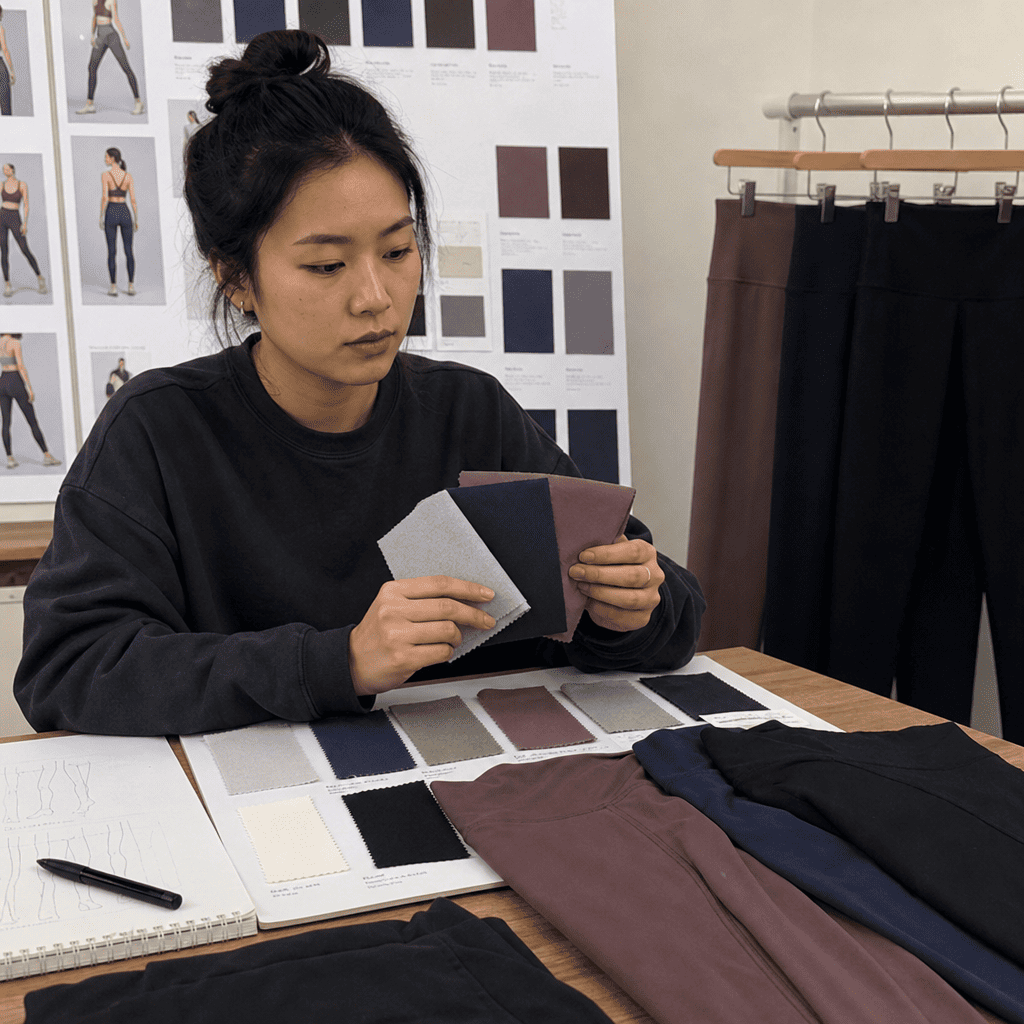
Cut-and-sew sampling can be more accessible for many early-stage brands because pattern changes are easier to visualize and adjust. A product team can alter a waistband height, panel curve, pocket shape, or seam placement during development. This flexibility can reduce friction during concept testing, although it does not remove the need for proper fit trials and quality control.
For established brands, seamless may still be attractive because of its distinctive comfort story and clean retail presentation. The key is to plan development with enough lead time for technical trials. Buyers should not assume that a seamless item is simpler because it has fewer seams; the complexity is often inside the knitting process.
B2B development checklist
Before committing to seamless or cut-and-sew cotton activewear, clarify the following:
- Target activity: Is the garment for yoga, gym training, recovery, travel, or everyday athleisure?
- Comfort promise: Is the main selling point softness, support, reduced chafing, compression, or breathability?
- Cotton role: Is cotton the main fiber, part of a blend, or used for selected panels?
- Fit standard: How will the garment be tested across sizes and body types?
- Design complexity: Does the product need pockets, lining, color blocking, mesh, rib zones, or contour knitting?
- Production scale: Are the expected quantities aligned with the selected manufacturing method?
- Care expectations: Will the garment maintain shape and comfort after repeated washing?
- Retail positioning: Is the customer buying performance, lounge comfort, premium basics, or fashion-led activewear?
A clear answer to these questions makes factory communication easier and reduces the risk of developing a product that looks right but performs poorly.
Durability depends on more than seam count
It is common to assume that fewer seams automatically mean better durability. In reality, durability depends on yarn quality, fabric structure, seam strength, stretch recovery, abrasion resistance, washing behavior, and how the garment is used. Seamless construction removes some seam failure points, but it can still be vulnerable if the knit structure snags, stretches out, or loses recovery.
Cut-and-sew garments have more joins, but those joins can add reinforcement when properly engineered. For example, a strong waistband seam or reinforced gusset can help a cotton legging handle repeated movement. The downside is that poor stitching, thread mismatch, or bulky seam construction can reduce comfort and shorten product life.
B2B teams should test durability through realistic use cycles. This includes laundering, stretch recovery, abrasion at the inner thigh, waistband elasticity, pilling, colorfastness, and seam strength. A single beautiful sample is not enough to approve production.
Care instructions also need to match the product. Seamless cotton pieces may require gentler washing to protect shape and knit integrity. Cut-and-sew cotton pieces may tolerate more familiar care routines, depending on fabric and trims, but they still need testing for shrinkage and twisting.
Merchandising strategy should match the construction story
The construction method should support how the product is sold to wholesale accounts, retailers, or direct brand partners. If the line is built around smooth comfort and minimal distraction, seamless workout clothes create a clear merchandising message. If the line is built around functional storage, strong silhouettes, and mixed-material styling, cut-and-sew may tell the story more convincingly.
For activewear for women, merchandising often depends on both fit confidence and visual appeal. Seamless cotton pieces can sit well in collections focused on tonal sets, ribbed textures, soft compression, and studio lifestyle. Cut-and-sew pieces can support more varied capsules, including gym sets, layered tops, joggers, bike shorts, and detail-rich leggings.
Retail buyers also need clarity. A product line that mixes both methods should explain why each item exists. For example, seamless cotton yoga pants may serve the studio-comfort category, while cut-and-sew cotton gym outfits may cover structured training and athleisure styling. This prevents the collection from feeling inconsistent and helps sales teams communicate benefits accurately.
Common product development mistakes to avoid
Many activewear problems begin when brands choose a construction method based on appearance alone. A seamless piece may look premium in a product photo, but it still needs the right fit, opacity, recovery, and wash behavior. A cut-and-sew piece may offer more design detail, but too many seams or panels can make the garment feel busy, stiff, or uncomfortable.
Another mistake is ignoring cotton’s limitations. Cotton can be comfortable, familiar, and commercially appealing, but it should be positioned honestly. If a garment is intended for heavy sweat or high-impact use, the development team should be careful with fiber blend, garment weight, and performance language.
A third mistake is approving samples without movement testing. Activewear must be tested in motion. Squats, lunges, forward folds, jumps, twists, and seated positions reveal issues that flat measurements cannot show.
Red flags during sample review
- Waistband rolls down after basic movement.
- Fabric becomes sheer during stretch.
- Seams feel rough or bulky against the skin.
- Knees or seat areas bag after short wear.
- Garment twists after washing.
- Compression feels uneven between left and right sides.
- Sizing changes too sharply between sample sizes.
- Decorative details interfere with comfort or stretch.
Catching these issues early protects margin, delivery timelines, and brand reputation.
A practical decision framework for brands
Choose seamless cotton activewear when the product promise centers on smoothness, flexibility, minimal friction, and a clean body-contouring look. This path works well for seamless cotton leggings, soft studio sets, refined basics, and pieces where the absence of bulky seams is part of the value proposition. It is especially strong when the design can be expressed through knit texture, compression zones, and subtle shaping.
Choose cut-and-sew cotton activewear when the product needs structure, detailed styling, mixed materials, reinforced support, or easier sample adjustment. This route is practical for cotton gym outfits, supportive tops, joggers, shorts, and leggings with pockets or panel design. It can also be a better option for brands that need more flexibility during early fit development.
Use both methods when the collection has multiple use cases. A balanced activewear line might include seamless fitness wear for yoga and daily comfort, plus cut-and-sew pieces for gym training and lifestyle styling. The strongest collections do not treat one method as universally better; they use each construction type where it makes the product more convincing.
OEM Capabilities: turning the right construction choice into a scalable product
OEM capability is where the seamless vs cut-and-sew decision becomes real. A strong OEM partner helps translate brand direction into materials, fit standards, samples, production methods, quality checks, and packaging requirements. For cotton activewear, this support is especially important because softness, stretch, recovery, breathability, and durability must be balanced from the start.
ZIYANG can be positioned as an OEM partner for brands that need practical development support across cotton activewear categories. For seamless athletic wear, OEM work may include yarn and blend consultation, knit structure planning, compression-zone development, sample refinement, size evaluation, color execution, and production quality review. For cut-and-sew cotton activewear, capabilities may include fabric sourcing, pattern development, grading, panel engineering, stitching selection, trim application, private label support, and bulk production coordination.
A capable OEM process should help brands answer key technical questions before bulk orders begin. Will seamless cotton leggings hold their shape after movement and washing? Do cotton yoga pants have enough opacity and recovery for studio use? Are cotton gym outfits structured enough for the intended training level? Is the selected construction method aligned with the brand’s target price, order quantity, and retail positioning?
OEM support is also valuable for customization. Depending on the product plan, brands may need logo application, custom labels, packaging, color matching, waistband adjustments, pocket development, rib textures, or coordinated sets. The more detailed the concept, the more important it becomes to align design ambition with production feasibility.
The best conclusion for B2B buyers is not that seamless is better than cut-and-sew, or that cut-and-sew is safer than seamless. The better conclusion is that construction should follow product purpose. With a clear brief and an OEM partner such as ZIYANG, brands can develop comfortable activewear that feels intentional, fits its activity, and is built for repeatable production rather than one good sample.