Top Cotton Activewear Brands and Manufacturers in America
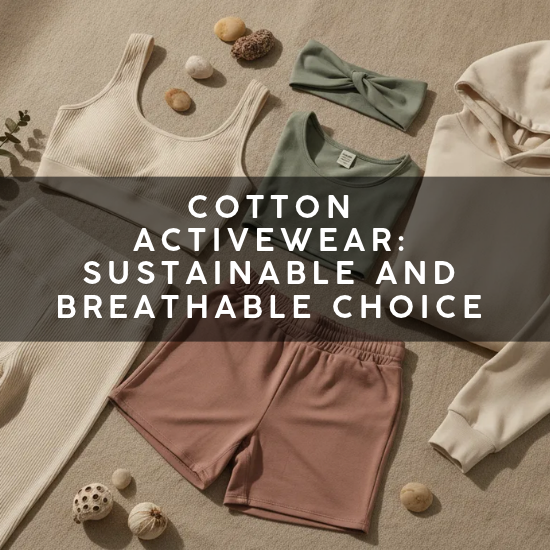
Cotton activewear in the U.S. has moved from basic lounge wear to a real category for yoga, Pilates, walking, travel, strength work, and daily athleisure. The best pieces balance natural fibers, verified organic claims, stretch recovery, opacity, and clear production. This guide to the top cotton activewear brands and manufacturers in America also helps shoppers compare USA cotton athletic wear before they buy leggings, bike shorts, bras, joggers, or tops.
Some brands are U.S.-based and sell cotton activewear to American shoppers. A smaller group also cuts, sews, or makes garments in the United States. That gap matters when you are looking for the best cotton activewear manufacturers in the USA, not just another activewear label.

What makes a cotton activewear brand worth trusting?
A good cotton activewear brand gives clear details about fiber content, certification, production place, chemical standards, and how the garment performs. In the U.S. market, that usually means looking for organic cotton percentages, GOTS or OEKO-TEX notes, correct country-of-origin labeling, and plain facts about where stretch fibers are used.
Cotton activewear is not the same as synthetic gym wear. Polyester and nylon lead high-sweat gear because they dry fast and can feel slick, firm, and light. Cotton, especially organic cotton, is chosen for airflow, softness, skin comfort, and less use of plastic-based fibers. For many American shoppers, the goal is not to replace every running tight or marathon top. It is to find cleaner, more comfortable pieces for the workouts they do most often.
The strongest brands make that trade-off clear. They do not pretend a mostly cotton legging acts like a technical compression tight. Instead, they design for low- to medium-impact movement, daily wear, layering, travel, and studio work where softness, coverage, and non-toxic claims matter as much as sweat-wicking speed.
The leading cotton activewear brands for U.S. shoppers
The brands below are useful starting points for buyers who want cotton-based activewear in America. Some are true domestic makers, while others are U.S. brands with certified materials and overseas production. That difference matters because ‘American brand’ and ‘made in USA’ are not the same claim.
PuraKai
PuraKai is one of the clearest fits for shoppers who want USA cotton clothing with activewear function. The brand says its organic cotton activewear has been made in the USA since 2012, uses GOTS-certified organic cotton, and is cut and sewn in its own Los Angeles factory. Its PureFlex line is listed as 92% organic cotton with 8% spandex, and the brand says it publishes an independent PFAS lab report. (purakai.com)
That mix makes PuraKai a strong pick for yoga leggings, no-front-seam leggings, high-waist leggings, bike shorts, and simple workout basics. The spandex gives fitted pieces enough stretch and recovery, while the cotton keeps the feel close to natural fabric.
MATE the Label
MATE the Label is a Los Angeles-based clean essentials brand with a large organic cotton activewear range. Its leggings collection describes 92% organic cotton leggings, GOTS-certified organic stretch staples, skin-safe dyes, and OEKO-TEX Standard 100 certification for finished materials; selected activewear pages list 92% organic cotton and 8% spandex. (matethelabel.com)
MATE is also certified B Corp and The Climate Label certified, according to its product and collection pages. Buyers should note that some activewear pages list manufacturing in India, so MATE is best seen as a U.S.-based brand with certified cotton activewear rather than a fully U.S.-made activewear maker. (matethelabel.com)
Lezat
Lezat focuses on non-toxic organic activewear made in Los Angeles. The site highlights organic cotton, Los Angeles production, active tops, shorts, bra tops, leggings, jumpsuits, and a WRAP-certified factory where the brand designs, prints, cuts, sews, finishes, and ships pieces under one roof. (lezat.com)
Lezat is a strong fit for shoppers who want colorful, fashion-forward cotton workout sets that still fit the natural-fiber space. It is a good match for studio outfits, casual active sets, and buyers who want a U.S. production story along with style variety.
Los Angeles Apparel
Los Angeles Apparel is not set up as an organic-only activewear company, but it is a major U.S. cotton apparel maker with cotton-spandex leggings, bike shorts, yoga leggings, and fleece leggings made in Los Angeles. Product pages show examples like leggings or bike shorts made of 95% cotton and 5% elastane. Some items use USA-grown cotton. (losangelesapparel.net)
For buyers comparing athletic wear manufacturers, Los Angeles Apparel is useful because it offers domestic production, broad basics, and easy-to-buy cotton-spandex shapes. It may not satisfy shoppers who need organic certification on every item, so fabric and product-page details should be checked style by style.
Groceries Apparel
Groceries Apparel is a California-made brand that highlights plant-based dyes, food-waste dye inputs, non-toxic ingredients, and its own vertically run Downtown Los Angeles factory. The brand says its products are made by the company in California and that it makes its own garments for transparency. (groceriesapparel.com)
Groceries is great for shoppers who prefer plant-based dyes and California-made basics over technical gym wear. Its strength is tees, tanks, sweats, casual activewear, and lower-impact movement wear.
Pact
Pact is easy for U.S. shoppers to find and offers GOTS-certified organic cotton leggings, tanks, tees, joggers, and everyday active-adjacent staples. The On The Go-To Legging page mentions GOTS and Fair Trade certification. It describes the garment as organic cotton with 10% elastane for stretch and recovery. (wearpact.com)
Pact is a good choice for budget-minded shoppers who want organic cotton certification and simple basics. However, buyers who want made-in-USA production should check each product’s country-of-origin details before they buy.
Blue Jogiel
Blue Jogiel is a small U.S. brand that makes activewear in Los Angeles from 100% organic cotton. The brand also says its cotton is organic certified and that it is working toward GOTS certification for future drops. (bluejogiel.com)
That makes it interesting for shoppers who prefer minimal synthetics and local production over high-compression performance. Because product ranges and certifications can change fast for smaller brands, check current pages for fabric mix, sizing, and certification status.
rün
Rün focuses on women’s activewear made in the USA from organic cotton, referencing GOTS-certified material. (runactive.co) For shoppers searching for American-grown and American-made cotton activewear, this type of brand is worth a close look.
As with any new label, buyers should look for full product composition, return policies, certification numbers where available, and clear production details. A brand’s promise is strongest when it is backed by product-level proof.
Cotton activewear works best for specific workouts
Cotton-based activewear shines when comfort, airflow, and skin feel matter more than fast dry time. That makes it a smart pick for yoga, Pilates, barre, stretching, walking, lounging, travel days, low-impact strength sessions, and daily errands after a workout.
For hard cardio, hot yoga, long runs, or high-sweat interval training, cotton can feel wet for longer because it absorbs moisture instead of moving it away from the skin as fast as many synthetics. MATE’s own activewear FAQ explains this point clearly, noting that organic cotton absorbs moisture rather than pulling it away like synthetic moisture-wicking fabrics. (matethelabel.com)
Use this quick match guide:
- Yoga and Pilates: Look for 90%+ cotton with a small amount of spandex or elastane for recovery, plus a waistband that does not roll.
- Walking and errands: Choose cotton leggings, bike shorts, ribbed tanks, and soft bras with medium-weight fabric.
- Strength training: Prioritize opacity, gussets, darker colors, and thicker cotton-spandex blends.
- Hot workouts: Consider cotton tops for warmups and cooldowns, but choose carefully if you dislike a damp fabric feel.
- Travel and daily wear: Cotton activewear is great because it feels less ‘plastic’ and often moves easily from exercise to casual style.
Why organic cotton activewear matters for health and the environment
Organic cotton activewear appeals to shoppers who want fewer synthetic fibers against their skin, especially during workouts when heat, sweat, and friction are part of the day. It also helps reduce use of plastic-based fibers such as polyester and nylon, which can shed microfibers during washing.
The U.S. Environmental Protection Agency says synthetic clothing can shed tiny plastic fragments called microfibers when washed, which adds to plastic pollution from clothes. Peer-reviewed studies have also measured microfiber shedding from polyester, nylon, acrylic, and other synthetic textiles during laundering. (epa.gov)
Chemical openness is another reason shoppers are switching. The Center for Environmental Health reported testing that found high levels of BPA in some sports bras, leggings, athletic shirts, and shorts from several mainstream activewear brands, based on California law thresholds. That does not mean every synthetic garment is unsafe, but it helps explain why many shoppers now look for cotton activewear with PFAS-free, BPA-free, OEKO-TEX, or GOTS-backed claims. (ceh.org)
Certifications help make those claims easier to judge. USDA guidance recognizes GOTS as a textile standard that can support organic textile sales in the U.S., while OEKO-TEX Standard 100 is a label for textiles tested for harmful substances. (ams.usda.gov)

Manufacturer perspective: materials, sourcing, standards, and compliance
For brands, retailers, and private-label buyers, cotton activewear is not just a design choice. It is a manufacturing step that affects fabric sourcing, fit, labels, compliance, quality control, and claim proof in the U.S. market.
Materials and fabric engineering
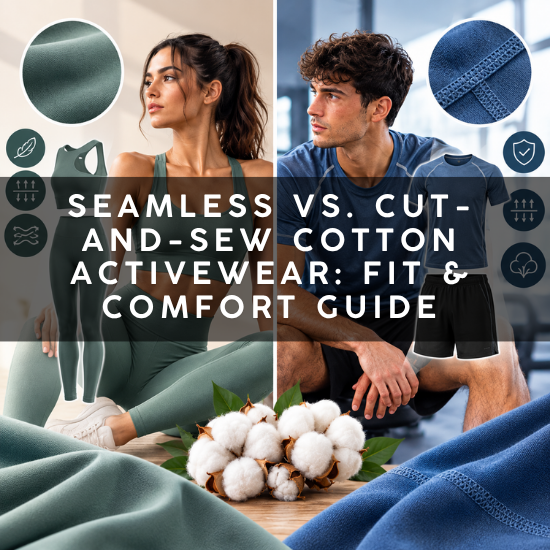
Most fitted cotton activewear uses a cotton-rich blend rather than 100% cotton. Leggings, bike shorts, unitards, and sports bras usually need elastane or spandex to recover after stretching. Common cotton-rich blends sit around 90% to 95% cotton with 5% to 10% elastane, though exact mixes vary by brand and style.
The higher the cotton content, the more natural and breathable the garment may feel. The higher the stretch content, the more compression, shape hold, and movement recovery a maker can build into the product. Good athletic wear manufacturers test this balance before production because a nice cotton fabric that bags at the knees will disappoint buyers fast.
Sourcing and documentation
Sourcing should be tracked at the fiber, yarn, fabric, dye, trim, and cut-and-sew steps. If a brand says GOTS-certified organic cotton, buyers should ask whether the certification covers the fiber, fabric, factory, finished garment, or full supply chain. GOTS lays out rules for organic textile processing, chemical inputs, environmental needs, human rights and social rules, and governance. (global-standard.org)
For U.S.-made claims, sourcing proof matters even more. A brand can be designed in America, cut and sewn in America, made with U.S.-grown cotton, or fully made in America; those are different claims and should not be mixed together.
Quality standards for cotton activewear
Cotton activewear quality depends on more than softness. Makers should test shrinkage, colorfastness, seam strength, waistband recovery, pilling, opacity, twist, and fit after washing. Buyers worry about leggings and shorts being see-through when stretched, and about bra straps and tank top necklines staying in place.
Sampling should include real movement checks: squats, lunges, forward folds, seated stretches, and repeated wash-and-wear cycles. Cotton-rich fabrics can feel premium, but they need strong pattern work and recovery tests to act like activewear, not just loungewear.
U.S. compliance and labeling
In the United States, textile labels usually need fiber content, country of origin, and the identity of the maker or another responsible business, according to FTC apparel labeling guidance. The Care Labeling Rule also requires care instructions. (ftc.gov)
‘Made in USA’ claims carry an extra standard. The FTC says marketers making unqualified Made in USA claims should be able to prove that products are ‘all or virtually all’ made in the United States, and it warns companies not to imply an entire product line is U.S.-made when only some products qualify. (ftc.gov)
Buyer’s checklist for choosing cotton activewear
A good cotton activewear purchase should match your workout, your values, and your comfort with trade-offs. Before buying, use this checklist:
- Check the fiber percentage. Look for cotton-rich blends for a natural feel with stretch.
- Confirm the certification. GOTS, OEKO-TEX, Fair Trade, B Corp, and Climate Label all mean different things; do not treat them as the same.
- Read the country-of-origin language. ‘Designed in USA,’ ‘made in Los Angeles,’ and ‘made in India’ point to different supply chains.
- Match fabric to activity. Cotton is ideal for yoga, walking, lifting, lounging, and travel, but less ideal for workouts where you need fast dry-down.
- Look for opacity guidance. Darker colors, thicker fabrics, gussets, and the right size usually help.
- Review care instructions. Cold washing and low heat can help protect stretch fibers and reduce shrinkage.
- Evaluate return policies. Fit is personal, especially with cotton leggings and bras.
FAQ: cotton activewear in America
Is cotton activewear good for working out?
Cotton activewear is great for yoga, Pilates, walking, barre, stretching, light strength training, and athleisure. It is soft, breathable, and comfortable on skin. For high-sweat cardio or long endurance sessions, synthetic performance gear may dry faster, so cotton is best when comfort and natural fiber content matter most.
Are the best cotton activewear manufacturers in the USA all organic?
No. Some U.S. makers produce cotton-spandex activewear without organic certification, while others focus on GOTS-certified organic cotton and non-toxic claims. If you care about organic sourcing, check product certification instead of assuming all cotton items are organic.
What certifications should I look for?
GOTS matters for organic textile supply chains, while OEKO-TEX Standard 100 focuses on harmful-substance testing. Fair Trade can point to labor and community standards, and B Corp certification looks at wider social and environmental accountability. The best choice depends on whether your priority is organic farming, chemical safety, worker standards, or overall company practice.
Does “made in USA” mean the same as “U.S.-based”?
No. A U.S.-based brand may design, sell, and ship from America while making goods overseas. A made-in-USA claim should be backed by domestic production proof, and the FTC standard for unqualified claims is ‘all or virtually all’ made in the United States. (ftc.gov)
How should I care for cotton activewear?
Wash cotton activewear in cold water with similar colors. Avoid bleach unless the label says it’s okay. Use low heat or air dry. High heat can shorten the life of elastane or spandex. Turning garments inside out can also protect color and cut down on abrasion.
Q&A
Question: Which brands in this guide are most relevant for shoppers who specifically want made-in-USA cotton activewear?
Short answer: PuraKai, Lezat, Los Angeles Apparel, Groceries Apparel, Blue Jogiel, and rün are the most relevant starting points for made-in-USA or made-in-California cotton activewear searches. The article notes that PuraKai cuts and sews in its own Los Angeles factory, Lezat highlights Los Angeles production, Los Angeles Apparel makes cotton-spandex basics in Los Angeles, Groceries Apparel uses its own Downtown Los Angeles factory, Blue Jogiel says its clothing is made locally in Los Angeles, and rün positions itself around organic cotton activewear grown and made in the USA.
Question: Why do many cotton activewear pieces include spandex or elastane?
Short answer: Fitted cotton activewear usually needs a small amount of spandex or elastane so the garment can stretch and recover during movement. Leggings, bike shorts, bras, and unitards made from 100% cotton may feel incredibly natural, but they can lose shape more easily. Cotton-rich blends around 90% to 95% cotton with 5% to 10% elastane often give a better mix of softness, airflow, fit hold, and workout use.
Question: How can shoppers tell whether an organic cotton claim is meaningful?
Short answer: Shoppers should look for product-level details, not just broad marketing words. The article recommends checking whether GOTS certification applies to the fiber, fabric, factory, finished garment, or full supply chain. It also says to compare certifications carefully because GOTS, OEKO-TEX, Fair Trade, B Corp, and Climate Label address different rules and should not be treated as the same.
Question: When is cotton activewear not the best choice?
Short answer: Cotton activewear may not be ideal for hard cardio, hot yoga, long runs, or high-sweat interval training because cotton absorbs moisture and can feel wet for longer. It is better for yoga, Pilates, barre, walking, stretching, light strength training, travel, lounging, and everyday athleisure, where softness, airflow, and natural fiber content are often more important than fast dry time.
The bottom line for U.S. cotton activewear buyers
The best cotton activewear brands in America are the ones that make their trade-offs visible. PuraKai, Lezat, Los Angeles Apparel, Groceries Apparel, and smaller made-in-USA labels are especially relevant for shoppers wanting domestic production, while MATE and Pact offer strong certified organic cotton options for the broader U.S. market.
For the most natural feel, choose high-cotton fabrics and simple silhouettes. For leggings or bras that hold shape through movement, opt for a small amount of elastane or spandex. The smartest purchase is not the garment with the loudest eco claim; it is the cotton activewear piece with clear sourcing, honest labeling, suitable performance, and a fit you will actually wear often.