The activewear market in 2026 is crowded, but the smartest buys still come down to three things: performance, fit, and how often you will actually wear the pieces. This guide breaks down the top activewear brands across running, lifting, yoga, hybrid training, athleisure, sustainability, inclusivity, and modest workout wear so you can build a gym wardrobe that works in real life. Whether you train in a New York studio, run along the Chicago lakefront, lift in a suburban gym, or want polished errands-to-Pilates style in Los Angeles, the right brand should match your movement and your lifestyle.
What makes an activewear brand worth shopping in 2026?
A great activewear brand in 2026 makes clothes that perform during the workout, feel good on different bodies, and hold enough style value to earn space in your regular wardrobe. The best fitness apparel should manage sweat, move without pinching, stay opaque during squats or stretches, and offer enough support for the activity it is designed for. Just as important, the best activewear brands 2026 shoppers should know are no longer limited to the biggest sportswear logos; smaller labels now compete through better fit niches, sustainable materials, modest coverage, and elevated styling.
That means the “best” brand depends on the job. A runner in humid Miami needs different high-performance apparel than someone doing reformer Pilates in Denver, heavy deadlifts in Dallas, or cold-weather walks in Boston. Instead of buying only what is trending, start with your most frequent workout, then choose the fabric, compression level, coverage, and support that make that workout easier.
The quick shortlist by workout and wardrobe goal
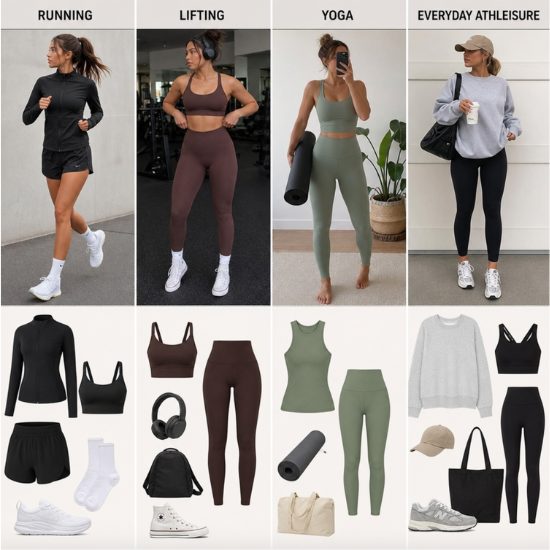
If you want a fast starting point, use this shortlist before diving into the brand-by-brand breakdown. These picks balance performance reputation, style relevance, and practical use cases rather than treating every label like it serves the same shopper.
- Running: On, Nike, Adidas, Lululemon, Tracksmith-style niche running labels, and Puma for hybrid run-training.
- Lifting and gym training: Nike, Gymshark, R.A.D., Puma, Lululemon Wunder Train, and Sweaty Betty Power pieces.
- Yoga and Pilates: Lululemon Align, Alo Yoga, Beyond Yoga, Vuori, Athleta, and FITH for modest studio coverage.
- Hybrid fitness and HYROX-style training: Puma, Nike Metcon, R.A.D., On training footwear, and technical shorts or tights with secure waistbands.
- Soft athleisure: Vuori, Lululemon, Beyond Yoga, Alo Yoga, and Athleta.
- Sustainability and size inclusivity: Girlfriend Collective, Athleta, Beyond Yoga, Vitality, and select recycled-material lines from major brands.
- Modest activewear: FITH and other coverage-first labels that design for movement rather than simply upsizing casual clothes.
This is also the easiest way to avoid buying popular workout clothes that do not match your routine. A buttery yoga tight may feel incredible for mat work but pill quickly under barbell knurling or backpack friction. A firm running tight may be brilliant for intervals but too compressive for a slow Sunday reset.
The performance leaders: Nike, Adidas, On, Puma, and R.A.D.
The leading sportswear brands still matter because they have deep product ranges, broad availability across the United States, and sport-specific design systems. They are often the safest place to start for shoes, base layers, running apparel, and training staples. The tradeoff is that huge catalogs can feel overwhelming, so focus on the product family built for your workout rather than shopping by logo alone.
Nike remains the all-round training giant
Nike is still one of the most dependable names for high-performance apparel, especially if you want running, gym, team-sport, and lifestyle options under one roof. Its Dri-FIT training and gym collections are built around sweat management, and the brand continues to frame performance innovation and sustainability through initiatives such as Move to Zero and newer material development. Nike’s own materials and product filings also highlight long-running technologies including Dri-FIT, Free, Flyknit, FlyEase, ZoomX, and React, which explains why the brand shows up in everything from local 5Ks to college weight rooms. (nike.com)
For gym-goers, Nike Pro tops and tights are easy building blocks for the best gym outfits because they layer well under shorts, hoodies, and warmups. For cross-training, the Free Metcon line blends a training-shoe platform with the flexibility associated with Nike Free; Nike describes the Free Metcon 7 as an update to its versatile training shoe with enhanced midfoot containment. (nike.com)
Adidas is strongest when speed and sport heritage matter
Adidas is a smart pick for runners who care about racing energy, lightweight layers, and a clean sport-lifestyle look. The Adizero family is positioned around competitive running, with Adidas describing the shoes and apparel as built to help runners chase personal records. (adidas.com)
Adidas also has a strong fashion bridge. Collaborations, terrace-inspired styling, and minimalist three-stripe pieces make the brand easy to wear beyond training. If you want stylish workout gear that works for a morning tempo run and a coffee stop afterward, Adidas is often less flashy than Nike but just as recognizable.
On owns the modern run-tech aesthetic
Swiss brand On has become a major name for runners who want technical shoes, minimalist apparel, and a crisp design language. On’s product identity is closely tied to CloudTec cushioning, while its LightSpray technology uses a robotic process to create an ultra-light, one-piece shoe upper for select performance racing models. (press.on-running.com)
On is especially strong for city runners in places like San Francisco, Seattle, Austin, and New York, where shoes often need to move from pavement to office-casual settings. The apparel tends to look quieter than traditional sportswear, which makes it useful for shoppers who want premium activewear brands without loud branding.
Puma is the brand to watch for hybrid fitness
Puma has made a serious push into training through its relationship with HYROX, the fitness-racing format that combines running with functional workout stations. Puma says it is the original partner of HYROX, and the brand’s training page now features HYROX-specific shoes, tights, bras, tanks, and shorts. Puma also announced an extension of its HYROX partnership through 2030, with official sportswear and title-partner roles tied to the competition ecosystem. (us.puma.com)
That makes Puma a strong choice if your workouts involve treadmill intervals, sled pushes, lunges, wall balls, and strength circuits. The best pieces are not just “gym clothes”; they are built around the reality that many people now train across running and resistance in the same session.
R.A.D. is for the modern functional athlete
R.A.D. is a smaller, more focused option for shoppers who want training gear with a performance-first identity. The brand describes itself as a footwear and apparel company built at the intersection of performance and aesthetic for the modern athlete. (shoprad.shop)
It will not replace a full wardrobe the way Nike or Adidas can, but it is worth knowing if your style leans CrossFit, strength, or functional fitness. R.A.D. also appeals to shoppers who like niche credibility: the person wearing it usually knows exactly what kind of training they are dressing for.
Studio-to-street staples that look as good as they feel
Not every workout requires race-day engineering. For yoga, Pilates, barre, walking, travel, and everyday errands, the best activewear is often the set you keep reaching for because it feels good and looks polished. This is where premium activewear brands have reshaped the market.
Lululemon is still the benchmark for technical comfort
Lululemon remains a core recommendation because its product families are relatively easy to match to use cases. Align is built around Nulu fabric and designed for yoga, while Fast and Free tights use Nulux fabric for running and include practical details such as pockets and a drawcord on select styles. (lululemon.co.uk)
The simple buying rule: choose Align for yoga, Pilates, lounging, and low-friction days; choose Wunder Train, Fast and Free, or other more technical lines for sweatier sessions. This helps you get the comfort Lululemon is known for without expecting one fabric to do every job.
Vuori is the soft-performance favorite
Vuori has become a go-to for people who want activewear that feels relaxed but still performs. Its DreamKnit collection is described as soft performance apparel designed for movement, lounging, and travel, while Vuori’s design philosophy emphasizes fabric-first comfort with four-way stretch and moisture-wicking qualities. (vuoriclothing.com)
For West Coast casual style, Vuori is one of the easiest brands to wear all day. It is especially strong for joggers, tees, half-zips, soft leggings, and clothes that can handle a walk, a light lift, or a long flight.
Alo Yoga delivers the fashion-forward studio look
Alo Yoga is best for shoppers who want sculpted silhouettes, matching sets, and a more visible fashion identity. Alo’s fabric guide describes Airlift as a high-compression fabric for maximum support and lists uses including medium-intensity training, yoga, runs, hikes, walks, and everyday comfort. (aloyoga.com)
Alo is not always the most practical choice for every heavy gym session, but it excels when the goal is elevated studio-to-street style. Think hot yoga, Pilates, matcha afterward, and outfits that photograph well without feeling like costume athleisure.
Beyond Yoga, Sweaty Betty, and Gymshark fill important gaps
Beyond Yoga is known for body-positive comfort and its signature Spacedye fabric, with parent-company materials describing the brand as premium athleisure focused on quality, fit, and comfort for a broad range of bodies and activities. (s23.q4cdn.com) It is a great option when softness and forgiving stretch matter more than firm compression.
Sweaty Betty is stronger for women who want supportive leggings and sports bras with a polished training feel. The brand says its leggings are built with quick-drying, sweat-wicking fabrics, secure waistbands, and practical pockets, which makes them useful for gym, run, and yoga wardrobes. (sweatybetty.com)
Gymshark remains a major name for lifting culture, bodybuilding aesthetics, and trend-driven gymwear. The brand’s own story connects its rise to fitted gym apparel for a new era of bodybuilders, and its current site still emphasizes lifting roots, activewear, running clothes, and loungewear essentials. (gymshark.com) If you like contour seams, cropped tops, oversized pump covers, and social-media gym style, Gymshark belongs on your shortlist.
Which brands lead on sustainability, inclusivity, and modest activewear?
The leaders are the brands that treat sustainability, sizing, and coverage as design priorities rather than side notes. Girlfriend Collective stands out for recycled fabrics and transparency; Athleta combines extended sizing with a broader sustainability platform; Beyond Yoga and Vitality are strong comfort-led inclusive options; and FITH is one of the most relevant names for modest activewear because it designs around coverage and movement from the start.
Girlfriend Collective is one of the clearest sustainability picks. The brand says it was among the first to make performance activewear from recycled materials and now uses core recycled fabrics made from post-consumer plastic waste. Its reuse and recycling program, ReGirlfriend, also accepts Girlfriend and non-Girlfriend items for reuse or recycling. (girlfriend.com) For shoppers who want sustainable activewear without giving up color, compression, or inclusive styling, it is one of the most recognizable choices.
Athleta is another practical choice, especially for U.S. shoppers who prefer easy returns, store access, and size variety. Athleta’s extended range page says its most inclusive size range is XXS to 3X, and the brand’s B Corp page references more sustainable materials such as recycled polyester, recycled nylon, organic cotton, and lower-impact cellulosic fibers. (athleta.gap.com) It is especially good for travel pants, skorts, swim, work-to-walk layers, and everyday fitness wardrobes.
FITH deserves special attention because modest activewear is still underserved by mainstream brands. The brand describes itself as modern activewear dedicated to modesty and movement, with categories such as modest gym wear, yoga, running clothes, swimwear, and workout hijabs. (getfith.co) That matters because coverage-first workout apparel has to solve different problems: hems should stay put, hijabs should manage heat and movement, and loose silhouettes still need to avoid getting in the way during training.
Premium, affordable, or niche: which activewear tier is right for you?
Premium activewear is worth it when the fabric, fit, and durability solve a real problem in your routine; affordable or mid-tier activewear is better when you need rotation basics or you are still figuring out your training style. Niche brands are ideal when you have a specific need—modest coverage, hybrid racing, bodybuilding cuts, marathon gear, or sustainable materials—that a broad sportswear label does not serve well.
Use this comparison before buying:
| Tier | Best for | Watch out for |
|---|---|---|
| Premium activewear brands | Technical fabrics, polished silhouettes, fewer but better pieces | Higher prices, delicate fabrics that may not suit every workout |
| Leading sportswear brands | Shoes, running layers, training basics, broad size and retail access | Huge catalogs that require careful filtering by sport |
| Affordable or trend-led brands | Extra gym sets, lifting outfits, seasonal colors | Inconsistent sizing, thinner fabrics, faster trend turnover |
| Niche performance brands | Hybrid training, racing, modest coverage, sustainability | Smaller ranges, fewer stores, limited color or size availability |
A good rule is to invest where friction shows up. If your leggings roll during squats, buy a better waistband. If your sports bra fails on intervals, upgrade support before buying another cute top. If you wash activewear constantly, prioritize durable fabrics over delicate brushed finishes.
How to choose the right brand for your body, sport, and city
The best gym outfits are not just matching sets; they are systems. A practical outfit pairs the right support level, fabric weight, compression, and coverage for the way you move. It should also make sense for your climate, commute, and comfort preferences.
For hot and humid cities such as Miami, Houston, New Orleans, or Atlanta, look for lightweight, sweat-wicking fabrics, lighter colors, mesh panels, and shorts or cropped tights that dry quickly. Nike, Adidas, On, Lululemon running pieces, and Alo Airlift-style sets can work well depending on the workout intensity.
For cold-weather markets like Boston, Minneapolis, Chicago, and New York, layering matters more. Start with a sweat-wicking base, add a thermal tight or jogger, and finish with a breathable jacket or vest. Lululemon, Nike, Athleta, Adidas, and Vuori all make sense here because they offer more than just leggings and bras.
For body type and fit, pay attention to rise, inseam, compression, and where seams land. Curvier bodies may prefer contoured waistbands and squat-proof fabrics with recovery. Petite shoppers often need 7/8 lengths or crop inseams to avoid bunching. Taller shoppers should check tall options from brands such as Athleta or inseam-specific brands before settling for “full length” tights that hit like crops.
Before checkout, run through this quick fit checklist:
- Squat, hinge, and lunge if possible. Check opacity and waistband movement.
- Match bra support to impact. Yoga support is not the same as running support.
- Choose fabric by friction. Brushed soft fabrics feel cozy but may pill faster under barbells, bags, or cycling seats.
- Check pockets and drawcords. Runners and commuters need storage more than studio-only shoppers.
- Buy for your real week. If you lift three times and do yoga once, your wardrobe should reflect that ratio.
Smart care makes stylish workout gear last longer
Even the best activewear brands need proper care. Technical fabrics rely on stretch fibers, finishes, and knit structures that can break down faster with high heat, fabric softener, and rough washing. If you are buying premium activewear brands, care is part of the investment.
Wash most activewear in cold water, turn pieces inside out, and skip fabric softener because it can interfere with moisture management. Air-dry when you can, especially for leggings, bras, and anything with elastane. Keep Velcro, denim, towels, and zip-heavy jackets away from delicate yoga fabrics. Rotate your most-used leggings and bras instead of wearing the same set for every session, because elastic needs recovery time too.
Post-purchase, also think about trend longevity. A black tight, supportive bra, neutral tank, and good training shoe will outlast a viral colorway. Statement pieces are fun, but wardrobe workhorses are what make the best fitness apparel feel worth the money.
The takeaway for 2026 shoppers
The best activewear brands 2026 shoppers should know are not all trying to win the same category. Nike, Adidas, On, Puma, and R.A.D. lead when performance and training specificity matter. Lululemon, Vuori, Alo Yoga, Beyond Yoga, Sweaty Betty, and Gymshark dominate different versions of comfort, style, lifting culture, and studio-to-street dressing. Girlfriend Collective, Athleta, Vitality, and FITH prove that sustainability, inclusive sizing, and modest coverage can be central to the product rather than an afterthought.
Start with your workout, then your fit needs, then your budget. When those three line up, activewear stops being another impulse purchase and becomes gear you actually use.