Supportive Women’s Sports Bras for Gym & Running
The right sports bra can make training feel steadier, cooler and more comfortable, whether you are running along the coast, lifting at the gym or heading to a Pilates class after work. Supportive women’s sports bras are not one-size-fits-all: the best option depends on impact level, breast shape, cup size, climate, fit preferences and how often you train. This guide explains how to compare support, fabric, construction and fit so you can choose activewear bras that suit Australian workouts without feeling restricted.
How much support do you need for your workout?
You need enough support to match the movement of your activity, not just the intensity of your effort. A slow strength session may feel tough, but it usually creates less bounce than running, skipping or HIIT, so the right bra category changes with the workout.
As a general guide, think in three support levels:
- Low support: Best for yoga, Pilates, stretching, walking, mobility sessions and relaxed everyday wear. These fitness bras are usually softer, lighter and more flexible.
- Medium support: Useful for strength training, cycling, reformer Pilates, gym circuits and lower-impact cardio. They balance hold with comfort, especially when you move between machines, mats and errands.
- High support: Designed for running, HIIT, aerobics, boxing, dance cardio and other bounce-heavy activities. These supportive bras usually use firmer fabrics, stronger bands and more structured cups.
If you regularly combine activities, choose based on the highest-impact part of your session. For example, if your gym day includes treadmill intervals after weights, a high-support bra is usually the safer choice. If your week includes both yoga and running, it is worth owning different women’s sports bras rather than expecting one style to do everything perfectly.
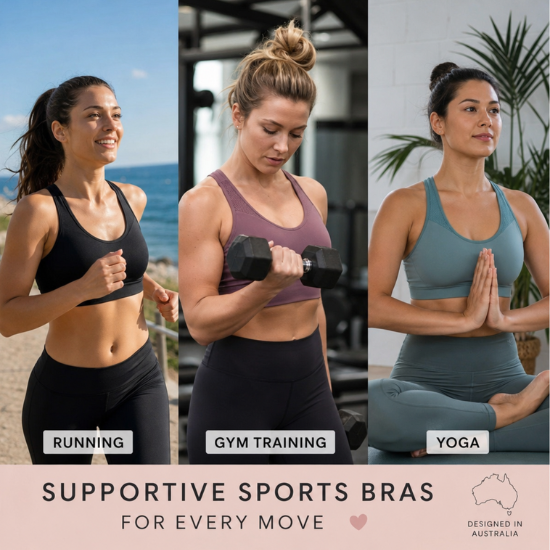
Caption: Different workouts need different support levels. Alt text idea: “Women wearing supportive sports bras for running, gym and yoga in Australia.”
Supportive women’s sports bras for running, gym and yoga
Running and HIIT place the highest demand on a bra because the body moves in multiple directions. For these workouts, look for firm underbands, wide or adjustable straps, secure backs and fabrics that recover well after stretching. A bra that feels fine while standing in a change room may still fail during repeated impact, so movement testing matters.
Gym training is more varied. During lifting, you may need a bra that stays put when you bend, hinge, press overhead or lie on a bench. During circuits, you may need more compression, moisture control and a neckline that does not shift when you move quickly. Medium to high support is often the sweet spot for gym sessions, depending on your cup size and the cardio included.
Yoga and Pilates usually call for comfort, stretch and breathability. Low-support activewear bras can work well here, particularly when they have soft seams and enough coverage for forward folds or inversions. If you prefer more hold, choose a medium-support style with flexible fabric rather than a rigid running bra.
Activity-to-support guide
| Activity | Suggested support | Features to prioritise |
|---|---|---|
| Running | High | Firm band, encapsulation or hybrid support, adjustable straps, sweat-wicking fabric |
| HIIT or bootcamp | High | Compression, secure back, minimal bounce, chafe-resistant seams |
| Strength training | Medium to high | Stable band, coverage, stretch recovery, straps that do not dig in |
| Cycling | Medium | Breathable fabric, smooth front, comfortable shoulder fit |
| Yoga or Pilates | Low to medium | Soft stretch, flexible underband, smooth seams, easy movement |
| Walking or errands | Low to medium | All-day comfort, breathable lining, simple styling |
Compression, encapsulation and hybrid designs
Sports bras support the bust in different ways. Understanding the construction helps you choose the best sports bras for your body and workouts, especially if you have struggled with bounce, pressure or awkward shaping.
Compression bras press the breasts closer to the chest wall. They are common in crop-style fitness bras and can feel simple, streamlined and easy to wear under tanks. They often suit smaller cup sizes and lower to medium-impact training, although firmer compression styles may work for higher-impact sessions for some people.
Encapsulation bras support each breast separately, more like a structured everyday bra. They can offer better shape and bounce control for larger cup sizes, running and high-impact activity. Many include moulded cups, seams or panels that help hold the bust without relying only on tightness.
Hybrid bras combine compression and encapsulation. These are often a smart option for running, HIIT and mixed gym days because they hold the bust close while also supporting each side. If you want maximum support without feeling flattened, a hybrid design may be worth trying.
Fit is where support really starts
A sports bra should feel firm, secure and breathable, not painful. The band should sit level around the ribcage and stay in place when you lift your arms, twist or jog on the spot. If it rides up, the band is likely too loose; if you cannot take a full breath, it may be too tight or too rigid for your body.
The band does much of the support work, so do not rely on straps alone. Straps should feel secure without cutting into your shoulders. If they leave deep marks quickly, loosen them, try a wider strap or choose a bra with a stronger underband.
Cup fit matters too. Spillage at the top or sides usually means the cup is too small or too low-cut for the activity. Gaping may mean the cup is too large, too tall or the shape is not right for you. Because sizing can vary across brands, treat your usual size as a starting point rather than a guarantee.
Quick fitting checklist
Before you commit to a sports bra, test it properly:
- Check the band: It should sit flat and level without rolling or riding up.
- Move your arms: Reach overhead, twist and bend forward to see if the bra shifts.
- Test bounce: Jog, jump or do a few star jumps if you are buying for running or HIIT.
- Assess breathing: You should feel held, not restricted.
- Look for rubbing points: Check underarms, shoulder seams, hooks and zips.
- Try your workout top over it: Make sure the neckline, straps and shape work with your activewear.
Fabric and construction details that improve comfort
Australian training conditions can be hot, humid and changeable, so fabric matters. Cotton may feel soft at first, but it tends to hold moisture, which can lead to heaviness and chafing during sweaty workouts. Moisture-wicking blends such as nylon or polyester with elastane are common in performance activewear bras because they manage sweat and stretch with movement.
Breathability is especially important for long runs, outdoor bootcamps and warm gym environments. Look for mesh panels, ventilated linings or lighter back constructions if you overheat easily. A bra can be supportive without feeling thick or suffocating.
Construction details also influence comfort. Wide straps distribute pressure better than narrow straps, while adjustable straps help fine-tune fit as fabric relaxes over time. Hook-and-eye backs make high-support bras easier to put on and remove, especially after a sweaty session. Zip-front styles can also be convenient, but the zip should have a protective backing so it does not rub.
Padding is a personal preference. Removable cups can add coverage and shape, but they may shift in the wash. Fixed padding or moulded cups can feel more stable, while unpadded designs may feel cooler and easier to care for.
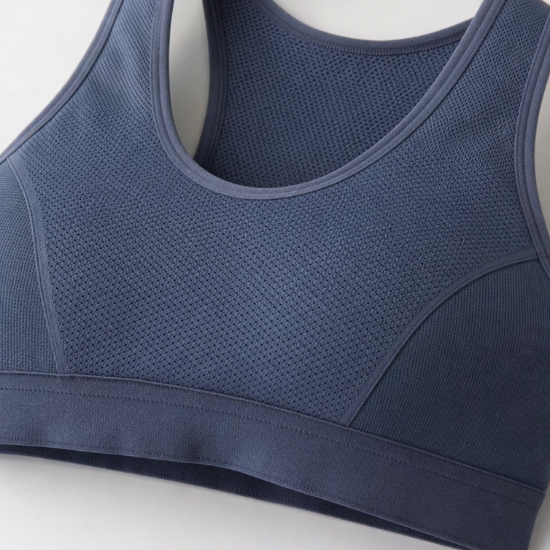
Caption: Fabric, straps and bands all affect comfort and support. Alt text idea: “Close-up of breathable sports bra fabric with wide straps and firm underband.”
Style can support performance too
Style is not only about appearance. The back shape, neckline and closure can change how a bra performs. Racerback and cross-back designs often feel secure because they pull straps inward and allow a wide range of shoulder movement. Traditional U-back styles can be easier to adjust and may suit people who dislike pressure near the neck.
A higher neckline can help with coverage during jumps, burpees or forward folds, while a lower neckline may feel cooler and work better under certain tops. If you plan to wear your bra from gym to coffee, choose a design that balances performance with the coverage and shape you feel comfortable wearing beyond training.
For plus-size shoppers, larger cup sizes, nursing needs or post-surgery comfort, prioritise adjustability and structure over trend-led styling. Wider bands, softer internal seams, front closures and encapsulation can make a significant difference. Not every category has equal size availability, particularly high-impact styles, so it may take more than one try to find supportive women’s sports bras that feel secure and comfortable.
Choosing fitness bras for real Australian routines
Most people do not train in neat categories. You might walk to the gym, lift weights, run intervals, then stop at the shops. In that case, choose a bra that handles the most demanding movement while still feeling comfortable enough for the rest of your day.
For an outdoor run in summer, prioritise high support, breathable panels and smooth seams that reduce rubbing when you sweat. For an air-conditioned gym session, you may prefer a medium-support bra with more stretch and a flattering shape under a tank. For travel, errands and light movement, a soft low-to-medium support bra may be more practical than a highly structured running style.
If you are building a small activewear wardrobe, start with these three options:
- One high-support running bra for impact-heavy sessions.
- One medium-support gym bra for weights, cycling and mixed training.
- One low-support comfort bra for yoga, walking and recovery days.
This approach helps each bra last longer because you are not wearing the same garment for every session. It also reduces the chance of compromising comfort or support for convenience.
Care, durability and when to replace your sports bra
Even the best sports bras lose support over time. Elastic fibres stretch, bands soften and sweat can wear down performance fabrics. If a bra starts riding up, feels looser on the tightest hook, causes more bounce than it used to or no longer springs back after washing, it is time to replace it.
Care makes a noticeable difference. Wash sports bras in cold water, use a gentle cycle or mesh bag, and avoid fabric softeners that can affect performance fibres. Air drying is better than tumble drying because heat can weaken elastic and alter the fit.
Rotate your bras if you train often. Giving elastic time to recover between wears helps preserve support. If you run several times a week, owning more than one high-support bra is not a luxury; it is a practical way to keep each one performing properly.
Internal link suggestions for a helpful activewear journey
To support readers who are comparing women’s sports bras and broader training gear, consider linking to related pages such as:
- Sports bra size guide: Help readers measure band and bust, compare fit notes and understand size variation.
- Running activewear collection: Connect high-impact bra advice with leggings, shorts and breathable tops.
- Gym outfit essentials: Guide shoppers building a versatile training wardrobe.
- Women’s activewear fabric guide: Explain moisture-wicking, stretch, compression and care.
- Plus-size activewear bras: Support inclusive browsing for readers needing extended sizing and stronger construction.
- Yoga and Pilates wear: Link low-impact bra guidance to softer, flexible studio pieces.
These links should feel natural in context, not forced. The best internal links answer the next question a reader is likely to ask.
FAQ: supportive bras for training
What are the best sports bras for running?
The best sports bras for running are usually high-support styles with a firm underband, secure straps, moisture-wicking fabric and either encapsulation or hybrid construction. The right choice should limit bounce without restricting breathing, and it should feel comfortable after several minutes of movement, not just when standing still.
Are compression bras or encapsulation bras better?
Neither is automatically better; it depends on your body and activity. Compression can work well for smaller cup sizes and lower to medium-impact workouts, while encapsulation often provides more controlled support for larger cup sizes and running. Hybrid designs can offer a strong middle ground for high-impact training.
How tight should a women’s sports bra be?
It should feel snug and stable, but you should still be able to breathe deeply and move naturally. If the band rides up, the bra is too loose or the shape is wrong. If it digs, pinches or causes numbness, it is too tight or not suited to your body.
Can I wear activewear bras every day?
Yes, many activewear bras are comfortable for everyday wear, especially low-to-medium support styles. For all-day use, choose breathable fabric, soft seams and a band that does not compress too firmly. High-impact bras are useful for training, but they may feel too structured for long casual wear.
How often should I replace fitness bras?
Replace them when the band stretches, support drops, fabric loses recovery or discomfort increases. How quickly that happens depends on workout frequency, sweat exposure, washing habits and fabric quality. Regular rotation and gentle care help extend their useful life.
A practical way to choose your next sports bra
Choosing supportive bras becomes easier when you start with your workout, then narrow by fit, fabric and construction. For running and HIIT, prioritise high support and bounce control. For the gym, choose enough structure for movement without sacrificing comfort. For yoga, walking and recovery, let softness, stretch and breathability lead.
The most useful bra is the one you can move in confidently. Try it on, test it like you train, and pay attention to how it feels after a few minutes of real movement. When your activewear bras match your routine, your body and Australia’s training conditions, they become less of an afterthought and more of a reliable part of every session.