Women’s workout shorts and athletic skirts should match how you move, how much coverage you prefer, and what feels comfortable during exercise. This article explains how to compare fit, fabric, liners, pockets, and construction without relying on appearance alone. Whether you’re considering ZIYANG activewear or refreshing your workout clothes, start with your actual routine—not the outfit in the product photo.
Which workout shorts or athletic skirts suit your activities?
The right starting point is the movement your clothing needs to accommodate: running calls for an unrestricted stride, strength training requires comfortable bending, and court sports demand coverage through lateral movement. Choose a style that handles those movements before considering color or matching sets. Use the comparisons below as a fitting-room shortlist, rather than treating any silhouette as universally best.
| Activity | Features to prioritize | What to test before keeping it |
|---|---|---|
| Running | Secure waistband, comfortable liner, useful storage | Jog with your phone and check for shifting |
| Strength training and HIIT | Flexible fit, reliable coverage, unobtrusive details | Squat, hinge, and step sideways |
| Yoga and Pilates | Comfortable waistband, smooth contact points, suitable coverage | Fold, sit, and lie on your back |
| Tennis and pickleball | Stable undershorts, accessible pockets, unrestricted lateral movement | Lunge and reach overhead |
| Walking and everyday wear | Comfortable seated fit, practical storage, preferred coverage | Walk, climb stairs, and sit down |
Running: check the complete shorts system
For running, assess the waistband, outer shell, liner, and storage together. REI identifies moisture-wicking materials, comfortable seam placement, and features such as liners and pockets as useful considerations in running clothing. A promising shell cannot compensate for an uncomfortable liner underneath. (rei.com)
During a try-on, jog gently in place with whatever you normally carry. Notice whether a phone changes the waistband’s position or whether the liner pulls as your stride lengthens. If thigh coverage matters to you, compare a fitted longer style with a loose shell rather than assuming the shortest pair will feel best.
Strength training, HIIT, and studio sessions
For gym sessions, build your try-on around your exercises. Test a squat and hip hinge for strength work, then add lateral steps or gentle hops if your routine includes them. Check whether the waistband, hems, and pockets stay comfortable without needing repeated adjustment.
For yoga or Pilates, spend part of the fitting session seated or lying down. Pay attention to any back pocket, zipper, or thick waistband seam where your body meets the mat. For reformer classes, also check your studio’s clothing guidance rather than assuming every decorative detail is suitable.
Court sports and walking
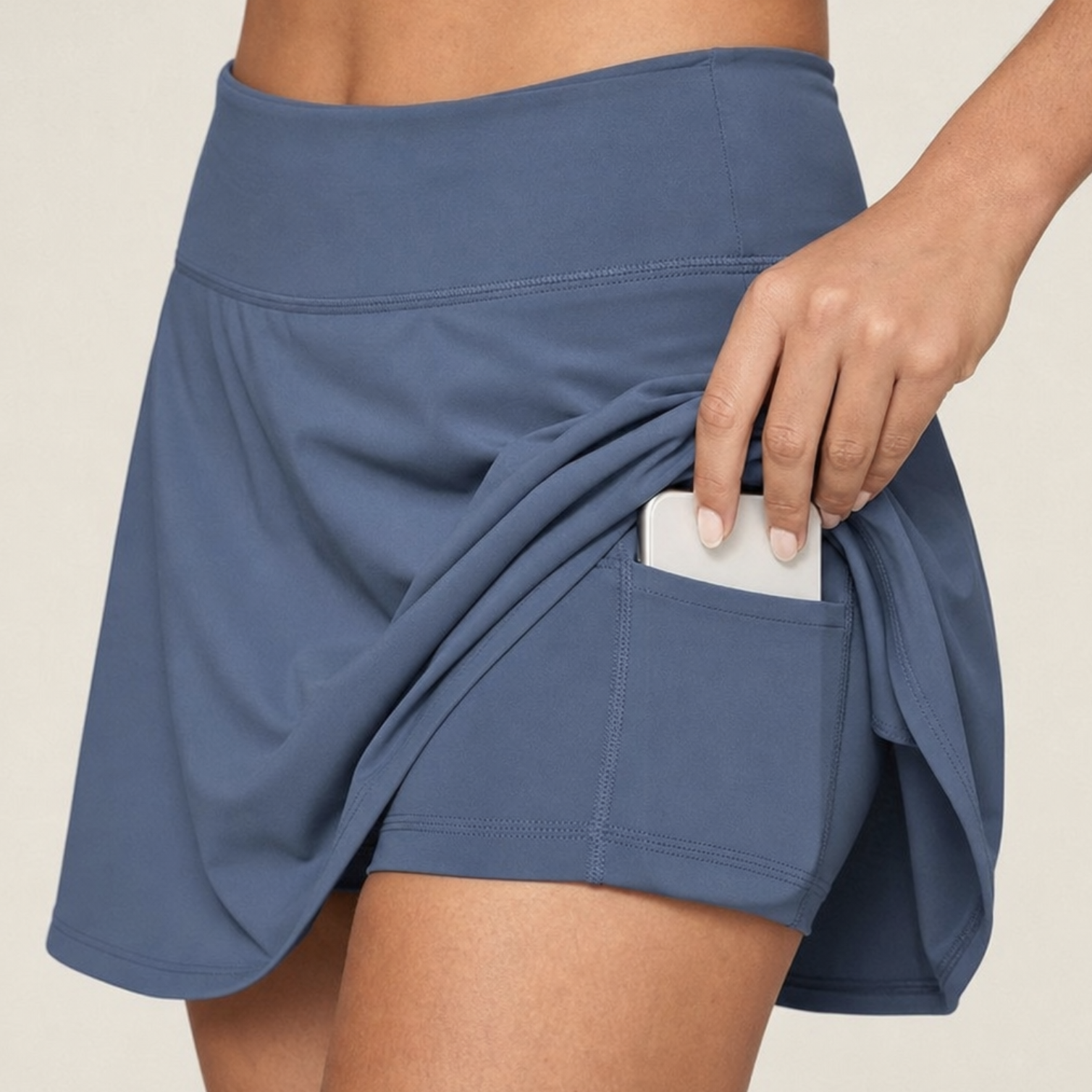
If you like the look of an athletic skirt, inspect the undershorts just as closely as the outer layer. Built-in shorts and inner pockets are established features in tennis-skirt designs, but their placement and construction vary by product. Nike’s court apparel offers examples of skirts combining stretchy undershorts with storage on the legs. (nike.com)
Try reaching for an imaginary ball, stepping wide, and retrieving something from each pocket. For walking, repeat the test with your everyday essentials. A skirt you enjoy standing in still needs to feel right when you sit on a bench or climb stairs.
Shorts, skirts, and skorts involve different trade-offs
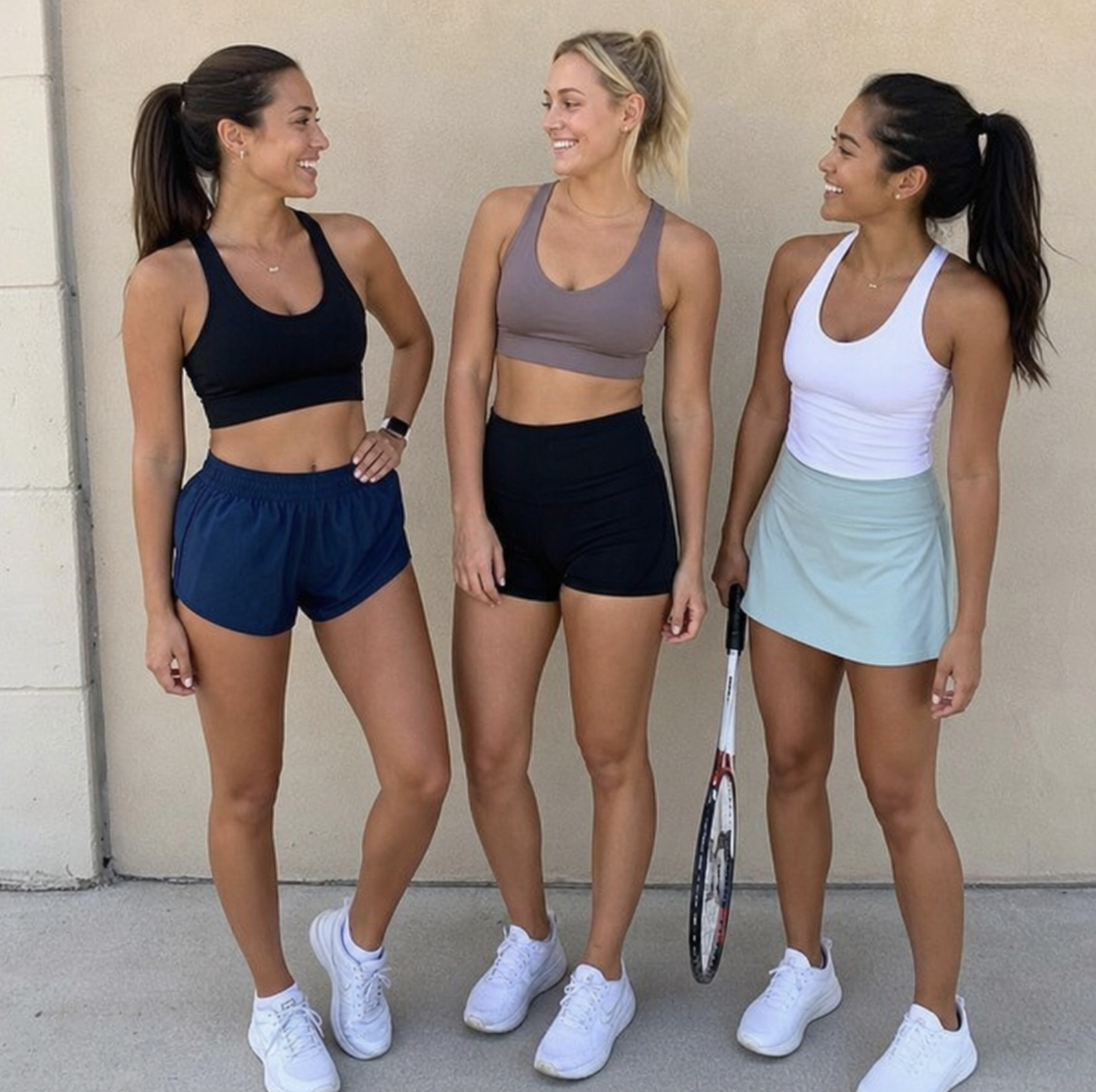
Compare garments by how their layers work, not just by their category name. When shopping for an athletic skirt, confirm whether the listing includes attached undershorts; do not infer construction from a front-facing photograph. Product descriptions and interior images are worth checking before you choose a size.
Use these distinctions to narrow your search:
- Loose shorts: Consider them if you prefer a relaxed outer layer. Check the liner separately and test how much the leg openings reveal during your exercises.
- Fitted shorts: Try these when you want a close-fitting silhouette. Examine the hems, waistband, and coverage while bending rather than judging fit only while standing.
- Two-in-one shorts: Evaluate both layers independently. Make sure you like the inner length as much as the outer shape.
- Athletic skirts with undershorts: Consider the outer skirt’s movement alongside the liner’s fit. Test pocket access without pulling the entire garment out of position.
There is no need to make one style serve every activity. You might prefer loose shorts for a short run, fitted shorts for lifting, and a skort for a weekend walk. The useful comparison is between your real use cases, not between silhouettes competing for a single “best” label.
How should women’s workout shorts and skorts fit?
Workout shorts and skorts should feel secure while allowing your intended movements without digging, pulling, or constant adjustment. Start with the specific product’s measurement guide, then confirm the result through movement. Manufacturer charts can distinguish between cuts within the same brand, so a familiar size is a starting point rather than a guarantee. (shop.lululemon.com)
Measure before choosing a size
Use a flexible tape and follow the seller’s measuring directions. Record your waist and hip measurements, then compare them with the chart for that exact garment. If the listing separates body measurements from garment measurements, make sure you know which one you are reading before ordering.
Keep the following information beside your measurements:
- Your preferred waistband position: Note where you want the garment to sit, then compare that preference with the product’s rise description.
- A comfortable reference garment: Measure shorts you already like, using the same method shown in the new product listing.
- Your intended use: Record whether you need the pair for running, mat work, court sessions, or casual walking.
- Any unresolved sizing question: Ask the seller before ordering when your measurements fall between options or the chart lacks useful detail.
Avoid choosing a smaller size simply to create a firmer feeling. Instead, look for a product designed to provide the fit you want. If the waist feels right but the legs do not, try another cut rather than repeatedly compromising on one area.
Choose rise by comfort, not a rule
When comparing high-rise and mid-rise options, begin with your preferred waistband locati0n. Sit down, bend forward, and raise one knee toward your chest. Notice whether the top edge presses into you, folds, or shifts away from where you want it.
Judge waistband width the same way. A broad band may appeal visually, but it still needs to feel comfortable through movement. Do not accept an irritating fit because a product description calls it supportive or flattering.
Compare inseam and skirt length separately
Use your reference shorts to decide where you want the hem to land. Then check how the new pair sits on your own body rather than relying solely on model photographs. For a skort, ask for the undershorts’ inseam as well as the outer skirt length if both are not listed.
During the try-on, walk, sit, and bend before reassessing coverage. Watch the hems rather than immediately pulling them back into place. That pause helps you distinguish a garment that settles comfortably from one you would keep adjusting throughout a session.
Which fabric features matter most during a workout?
Look for fabric information that addresses your needs: moisture management for sweaty sessions, comfortable stretch for movement, and suitable coverage when the material is under tension. Moisture-wicking describes the movement of liquid through fabric; it is not simply another word for softness. Evaluate performance descriptions alongside construction details and your own fit test. (patagonia.com)
Read the composition without treating it as a score
A fiber label gives you useful information, but it does not answer every question about the finished garment. REI lists polyester and nylon among common running-clothing materials and describes their use in moisture-managing, quick-drying apparel. Still, compare the actual product description rather than assuming two garments with similar labels will feel identical. (rei.com)
When comparing ZIYANG activewear, review the composition and construction for the individual style. Its published shorts catalog includes different garment designs and material specifications, making product-level comparison more useful than a blanket assumption about the brand. Request clarification if the listing does not explain the feature you need. (cnyogaclothing.com)
Test coverage instead of trusting thickness
Opacity deserves its own check. Nike’s discussion of squat-proof apparel explains that coverage is evaluated under stretch and that fabric construction matters. A garment that looks substantial on a hanger still warrants inspection in the positions you plan to use it. (nike.com)
Try your usual squat or forward fold under clear lighting, using a mirror or someone you trust to check coverage. Assess the exact color and size you intend to keep. NVGTN’s own guidance notes that color, sizing, and fabric distribution can affect opacity, reinforcing the value of checking the actual garment rather than a general collection claim. (support.nvgtn.com)
Treat compression language as a prompt to investigate
If you prefer a held-in feel, compare descriptions of fit and ask what the seller means by “compression.” REI describes compression running garments as having a very snug fit. That description alone should not substitute for evidence of any additional performance promise. (rei.com)
During a try-on, check whether you can comfortably complete your routine’s movements. Do not make tighter clothing your default solution for a loose waistband or moving hem. Try a different size or construction when the overall fit does not work.
Small construction details deserve a close look
Turn the garment inside out before deciding whether it belongs in your workout rotation. Inspect the surfaces that touch your skin, including seams, labels, waistband joins, and liner edges. REI’s chafing guidance identifies fit, friction, moisture, and seam placement as relevant considerations; fewer seams do not remove the need to evaluate comfort. (rei.com)
Rather than relying on “seamless” or “anti-chafe” language, use a focused inspection:
- Run your fingers along the inside seams and note any rough or bulky joins.
- Check whether labels or trim sit where you already dislike pressure.
- Examine the liner’s leg openings and waistband separately from the outer layer.
- Look for uneven stitching, loose threads, or details that need clarification before wear.
- Repeat a few relevant movements and identify the exact locati0n of any rubbing.
Take early discomfort seriously instead of assuming it will disappear once you start exercising. REI advises paying attention to irritation during a try-on because repeated movement can make it more troublesome. If one construction repeatedly bothers you, use that observation to guide the next comparison. (rei.com)
Make pockets pass a real-life test
Decide what you intend to carry before treating pockets as a benefit. An empty pocket tells you little about how you will use it, so try your phone with its case, your key, or another everyday essential. Check access while standing and moving, without forcing an item into a space that appears unsuitable.
For court sessions, rehearse the way you retrieve a ball. For running or walking, take a few steps with your intended load and notice whether you dislike the balance. If you would rather carry essentials separately, choose on that basis instead of paying extra attention to a pocket you will never use.
Build a wardrobe around your own week
Before shopping, write down the workouts you actually repeat. Separate essential needs from occasional preferences, then identify the gap in your current rotation. This keeps an attractive new color from distracting you from the shorts or skirt you genuinely need.
For example, if most of your week involves lifting and Pilates, begin by comparing garments in those movements. If you mainly walk and occasionally play pickleball, give seated comfort and court-ready coverage more attention. Treat a hypothetical future routine as secondary until you have covered your existing one.
Style the pieces in ways you enjoy outside the gym, too. Try a fitted pair with a relaxed tee, or pair an athletic skirt with a simple top and light layer. Before keeping a matching set, check whether you also like each piece with clothes already in your wardrobe.
Use this final wardrobe check:
- Name the activity for which you would reach for the garment first.
- Identify one existing top you would wear with it.
- Confirm where you would carry your essentials.
- Decide whether its care requirements fit your routine.
Plan for your local setting in the United States
For U.S. shoppers considering ZIYANG workout clothes, localization is most useful when it reflects the conditions and logistics of your own day. Think about your route, exercise space, changing facilities, and trip home. A city name should provide context—not replace checking the actual forecast or venue.
For a Miami park workout, consider how you want to handle a sweaty change of clothes afterward. For a Phoenix outdoor session, review the forecast and your broader sun-protection plan. If you train indoors in Seattle or Chicago, base your choice on the gym session while separately planning layers for the journey there.
Keep garment claims specific. REI notes that UPF-rated clothing provides tested sun protection, so do not assume that an ordinary athletic fabric carries the same rating. Check the product’s stated protection rather than inferring it from color, thickness, or coverage alone. (rei.com)
When ordering for delivery in the United States, verify the measurement units, delivery information, and return conditions shown by the seller. Resolve uncertainty before removing tags or wearing the item for exercise. This is especially useful when comparing listings that present sizing information differently.
Compare sellers and product claims carefully
Search results can mix consumer brands, manufacturers, and apparel distributors. If you encounter “s s activewear” while researching workout clothes, note that S&S Activewear identifies itself as a wholesale apparel and accessory distributor serving the United States and Canada. Review the purchasing context rather than assuming every result represents the same kind of shopping experience. (ssactivewear.com)
For ZIYANG or any other label, compare the individual garment’s specifications with your shortlist. Ask about missing measurements, liner construction, care instructions, or the meaning of an unfamiliar feature claim. Keep unanswered questions visible instead of filling the gaps with assumptions.
Apply the same discipline to sustainability and durability language. Look for a specific material description, identified certification, or clearly explained test before giving a claim weight. Do not treat an unverified wash-count promise, recycled-content claim, or broad “eco-friendly” label as proof of every benefit you want.
Care for your activewear with the label in charge
Check the care instructions before purchasing, not only after your first workout. Nike’s workout-clothing guidance recommends airing damp garments, using suitable washing methods, and avoiding fabric softener on performance clothing. Follow the individual garment’s label whenever its instructions are more specific. (nike.com)
Build a manageable routine around those instructions:
- Remove damp clothing from your gym bag rather than leaving it bundled inside.
- Read the label before choosing the wash temperature and cycle.
- Use detergent as directed and avoid adding fabric softener to performance garments.
- Follow the drying instructions instead of assuming every piece tolerates the same treatment.
After washing, inspect the waistband, seams, and fabric before your next session. Note any change that affects comfort or coverage. Use your own wear history to inform future purchases rather than expecting a precise lifespan from every pair. (nike.com)
Choose the pair you can stop thinking about
The most useful workout shorts or athletic skirt will fit your movements, coverage preferences, storage needs, and routine. Start with one clearly defined use, compare the relevant details, and complete a movement test before committing. When considering ZIYANG activewear, use that same practical standard: choose the garment that earns its place in your week, not simply the one that photographs best.