Bonded Seamless Construction: Clean lines, zero chafing, and maximum comfort in fall long-sleeves and pants.
Bonded seamless construction combines reduced-seam garment design with bonded joins or finishes to create smooth, low-profile activewear. For buyers evaluating ZIYANG fall long-sleeves and pants, the priorities are clear: clean lines, a zero-chafing design goal, and maximum comfort supported by sample testing—not appearance alone. This article explains the construction choices, quality checks, and wholesale sourcing decisions that help turn those priorities into a purchasing specification.
What is bonded seamless construction?
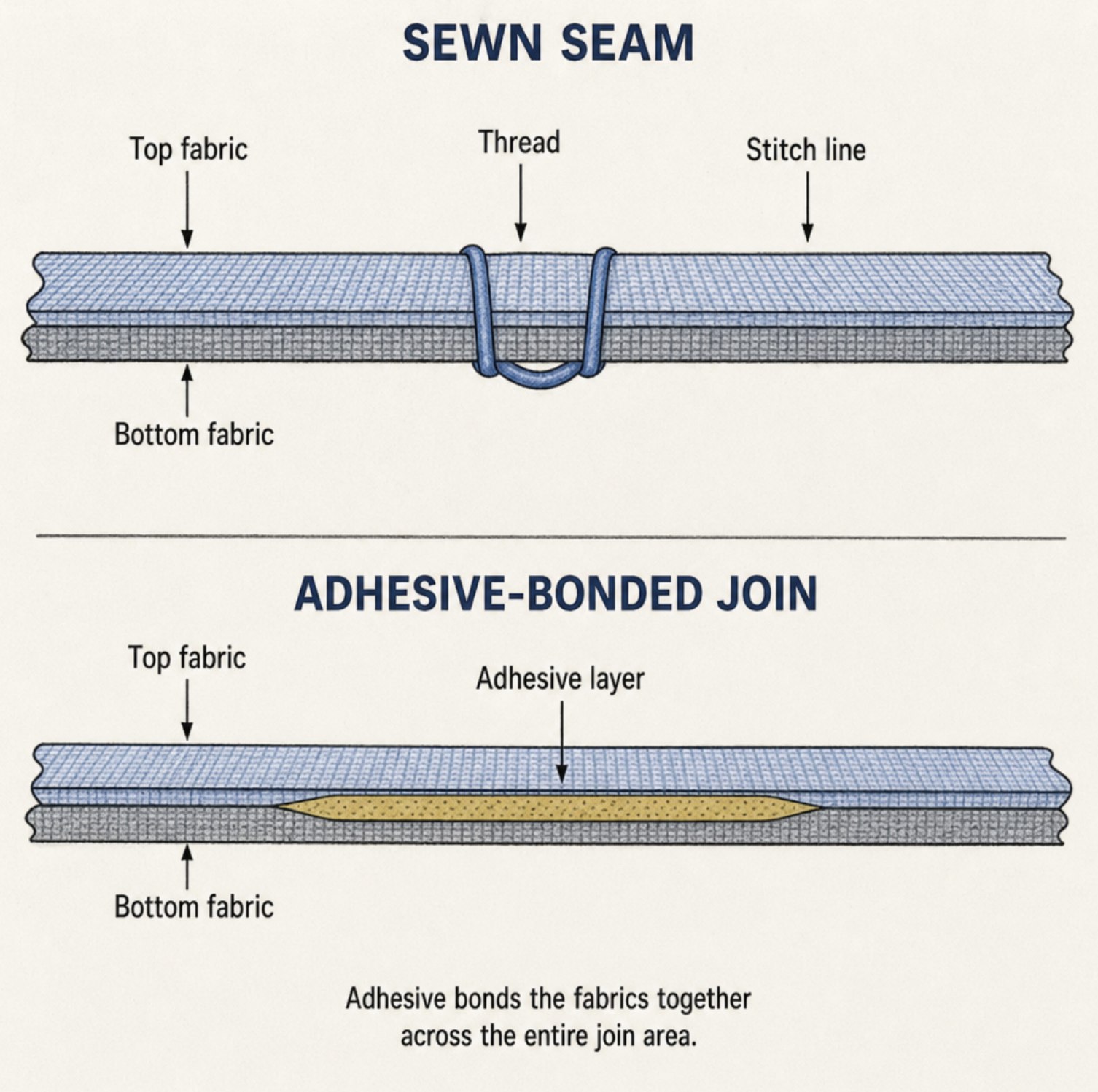
Bonded seamless construction describes an approach that brings together seamless garment formation and bonding at selected joins or edges. Seamless knitting forms garment structures on specialized knitting equipment, while adhesive bonding can replace stitching in selected applications. Buyers should establish which techniques a particular style actually uses rather than treating “bonded seamless” as one uniform manufacturing method. (santoni.com)
Three distinctions belong in every development conversation:
- Seamless knitting: Ask which parts are knitted as continuous structures and where assembly remains necessary. Santoni, for example, supplies electronic circular knitting machines for seamless sportswear and activewear; this does not establish which machinery ZIYANG uses. (santoni.com)
- Seamless bonding: Ask whether selected hems, openings, or joins use an adhesive film. Thermoplastic apparel adhesives require a controlled combination of heat, pressure, and processing time. (bemisworldwide.com)
- Sewn construction: Identify any remaining stitched joins separately. Sewing thread, seam softness, strength, and elongation remain important wherever stitching contacts the body. (cdn.coats.com)
A flat-looking join is not enough to identify the method. Request an annotated construction diagram for each ZIYANG style, showing knitted areas, bonded edges, and sewn connections. Ask for the specified stitch type wherever the description says “flatlock,” rather than accepting that label as evidence of bonding.
For purchasing purposes, translate the broad phrase construction bonding into locati0n-specific instructions. “Bonded sleeve hem” is actionable; “premium seamless finish” leaves too much open to interpretation.
Clean lines that support a fall assortment
Low-profile bonding can support smooth fit, sleek edges, and a less bulky appearance. Adhesive suppliers identify these as potential performance-wear benefits, but the result depends on the application rather than the construction label alone. (bemisworldwide.com)
For ZIYANG fall long-sleeves and pants, make clean lines a sample-approval criterion. Review the garments independently and as a coordinated outfit. Pay particular attention to visible transitions at cuffs, necklines, waistbands, and leg openings.
Build the merchandising review around three realistic uses:
- Training layers: Evaluate a long-sleeve beneath the intended jacket or vest. Check whether its openings sit smoothly and whether the layering combination restricts movement.
- Studio-to-everyday outfits: Review pants with both fitted and relaxed tops. Decide whether the silhouette supports your assortment’s intended balance of athletic function and everyday styling.
- Coordinated fall sets: Compare top and bottom colors together under agreed lighting. Approve the relationship between textures as well as the shade match.
Do not approve aesthetics only on a hanger. Photograph samples standing, seated, and in motion, then examine the same details after laundering. Include both light and dark development colors if they are part of the planned range.
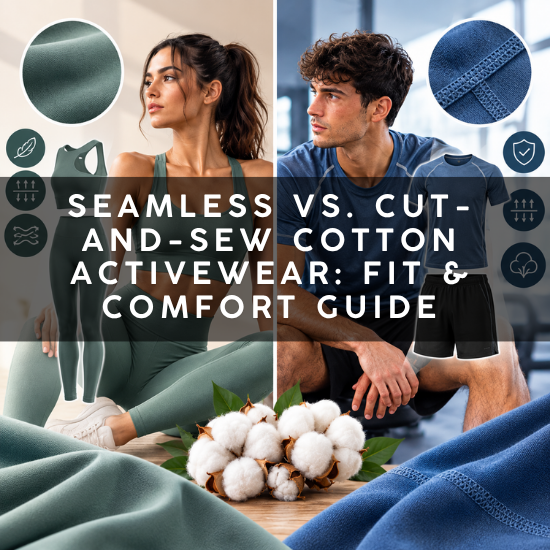
For US activewear wholesale presentations, these images also provide a practical way to explain the design. Show the actual finish beside a close-up of the interior instead of relying on an unexplained “seamless” badge. Keep every product description consistent with the approved construction map.
How can buyers assess the zero-chafing comfort promise?
Buyers should assess the zero-chafing promise through wear trials, interior inspection, and movement testing—not infer it from a seamless design label. Soft, secure seams matter wherever construction contacts skin, and seam evaluation must balance bulk, stretch, strength, and softness. A flatter appearance alone does not establish comfort for every wearer. (cdn.coats.com)
Treat zero chafing as ZIYANG’s development objective for these fall styles, not an untested universal guarantee. Ask wear-test participants to record where irritation occurs, which movements trigger it, and whether the sensation changes during the session. Include the intended base layers and outer layers in the trial.
Use a repeatable movement sequence: overhead reaches, arm swings, squats, lunges, walking, and seated transitions. For long-sleeves, inspect underarms, neckline edges, cuffs, and any remaining assembly joins. For pants, focus on waistband contact, the gusset, inner legs, and leg openings.
Record more than a simple pass or fail. Note edge pressure, rubbing, garment migration, restricted movement, and any need for repeated adjustment. Compare feedback across the planned size range rather than approving the entire order from one reference-size fitting.
Define maximum comfort through observable acceptance criteria: freedom of movement, acceptable next-to-skin feel, stable fit, and no uncomfortable construction edges during the agreed trial. Repeat the assessment on washed samples before using strong comfort claims in US-facing product copy.
Specify bonded materials as a complete system
Bonded materials should be evaluated as a fabric-and-adhesive combination, not as independent components. Apparel adhesive ranges differ in activation conditions, stretch behavior, recovery, and intended substrates. A film selected for one fabric or design objective should not automatically be carried into another style. (bemisworldwide.com)
For ZIYANG sourcing discussions, request the actual fiber composition, fabric weight, knit structure, finish, and adhesive specification. If nylon, polyester, or elastane blends are proposed, assess the finished candidate rather than assuming that a familiar fiber name guarantees the required performance.
Use the material brief to answer practical assortment questions:
- Layering role: Is the long-sleeve intended as a close-fitting base layer, a standalone training top, or a transitional everyday piece?
- Pants coverage: What opacity and visual appearance must the sample maintain during bending and stretching?
- Fit recovery: What waistband, knee, elbow, and seat appearance is acceptable after movement and rest?
- Interior feel: How should bonded areas compare with the surrounding fabric when touched and worn?
Keep thermal and moisture claims separate from construction claims. AATCC provides distinct methods for liquid moisture management, wicking, drying, and dimensional change; “bonded seamless” is not a substitute for evidence addressing those properties. (aatcc.org)
For a United States fall assortment, define the intended activity and layering scenario before requesting “warm,” “breathable,” or “quick-drying” performance. Ask ZIYANG which options can meet that brief and what supporting test information is available. Apply the same discipline to antibacterial, compression, and recycled-content descriptions: confirm the specific feature before placing it in a listing.
Manufacturing quality begins before bulk production
Successful bonding requires more than pressing two fabric surfaces together. Adhesive selection and controlled sealing conditions affect bond strength, elasticity, and wash durability; prototype evaluation should establish requirements that production checks can then monitor. (bemisworldwide.com)
For ZIYANG fall activewear, request a documented approval sequence covering materials, construction, fit, and finished appearance. Establish a retained reference sample, identify who can authorize changes, and require review before any material substitution. These are proposed purchasing controls, not claims about an existing ZIYANG factory procedure.
Control the bonding process
Ask the production team to document the approved adhesive, equipment settings, application locati0n, and inspection method. Confirm how operators verify the agreed process and how suspect pieces are isolated. Include bonded areas exposed to additional heat during later manufacturing stages in the validation plan; adhesive suppliers specifically recommend testing applications that undergo repeated heating. (bemisworldwide.com)
Do not prescribe a universal temperature or dwell time in a generic tech pack. Use conditions established for the selected material system, then ask how they will be controlled throughout the order. If a fabric finish changes, request confirmation that the existing approval still applies.
Inspect the complete garment
Agree on a checklist that covers appearance, movement, and laundering rather than bond strength alone:
- Bond integrity: Specify where and how joins will be tested, including the acceptance criteria established during development.
- Stretch behavior: Check bonded areas alongside surrounding fabric and document unacceptable restriction or distortion.
- Visual craftsmanship: Define tolerances for exposed adhesive, uneven edges, puckering, misalignment, and inconsistent finish width.
- Post-wash condition: Reassess bond edges, garment measurements, surface appearance, and fit using the agreed care procedure.
- Set consistency: Compare top and pants against approved shade references, not just against each other.
AATCC lists separate methods for garment dimensional change after home laundering, apparel appearance after laundering, and instrumental color measurement. Ask the testing provider to select appropriate methods and report results against your agreed requirements; naming a test method alone does not prove that a style has passed it. (aatcc.org)
Record corrective actions as well as inspection results. If a sample fails, identify the affected material, construction locati0n, and production stage before approving a revised version. Keep the revised sample distinguishable from the rejected one so the bulk-production reference remains unambiguous.
Build the wholesale order around repeatable specifications
When discussing ZIYANG wholesale purchasing, start with a shared product brief rather than a request for the lowest unit quote. Specify the intended customer, activity, size range, color assortment, construction map, and evidence needed for approval. Then ask which requirements are available within the proposed development and production arrangement.
A coordinated long-sleeve-and-pants program gives buyers a useful framework for assortment planning: matching colors, consistent fit expectations, and aligned product descriptions. Explore those opportunities without assuming that matching styles carry identical material requirements or purchasing terms.
Before comparing quotations, resolve these commercial details:
- Order structure: Confirm minimum quantities by style, color, and size allocation. Ask whether mixed-size or coordinated-set orders are possible.
- Development scope: Separate sampling, revisions, testing, labeling, and packaging responsibilities. Identify approval deadlines for each stage.
- Material continuity: Ask how approved fabric and adhesive specifications will be maintained across the first order and potential reorders.
- Delivery planning: Confirm the production schedule, shipping terms, destination, and responsibility for each logistics step serving your United States distribution plan.
- Quality resolution: Agree on inspection access, defect reporting, corrective action, and the process for handling nonconforming goods.
Compare total program costs, not isolated garment prices. Include the quoted development work, testing, packaging, freight, inspection, and any agreed contingency allowance in your internal evaluation. Keep assumptions visible so competing proposals can be assessed on equivalent terms.
For repeat orders, retain the approved sample, specification revision, color reference, and supporting reports. Require confirmation before changes are made. This creates a clearer purchasing record than relying on a previous purchase-order number alone.
Keep sustainability claims specific
Include sustainability questions in the sourcing brief, but do not present bonded seamless construction as automatic proof of lower environmental impact. Ask ZIYANG for evidence tied to the proposed garment: verified recycled content where offered, recorded material usage, packaging specifications, and traceability information relevant to your purchasing policy.
If reduced cutting waste is proposed as a benefit, request a defined comparison and supporting production data. If recycled yarn is requested, confirm its availability and documentation before making a commitment. Keep environmental claims as specific as the construction claims so merchandising language does not outrun the evidence.
Turn the design promise into an approved product
ZIYANG fall long-sleeves and pants should be evaluated against a connected brief: clean lines for the desired silhouette, a zero-chafing development goal, and maximum comfort demonstrated through realistic trials. Material selection, bonding control, garment testing, and wholesale terms all belong in that decision.
Bring ZIYANG your intended US assortment, target fit, construction priorities, and purchasing requirements. Request representative samples and confirmation of available materials, testing support, quantities, and timelines. Approve the garment you can inspect and document—not just the construction term attached to it.