Why 100% Cotton Workout Clothes Are Having a Major Moment Right Now
For retail buyers, merchandisers, and private-label brand owners, 100% cotton workout clothes are gaining momentum because the market is asking for comfort-first activewear, material transparency, and natural-fiber storytelling. The opportunity is real, but so are the performance limitations: cotton absorbs moisture and dries slowly, which means the best-selling assortments are usually built around low-to-moderate sweat use-cases and lifestyle positioning rather than high-intensity performance claims.
This buyer-focused guide breaks down why the trend is accelerating, which SKUs are most viable, how to spec and test cotton gym wear for wholesale programs, and what sourcing teams should ask suppliers before committing to bulk production. It’s written for teams who need to decide what to stock, how to position it, and how to reduce quality and compliance risk.
Why 100% cotton activewear is trending now (from a buyer’s perspective)
Multiple demand signals are converging and showing up in line reviews and RFQs:
- Comfort is the new performance. Consumers increasingly want soft hand-feel, relaxed fits, and pieces that move from light training to daily wear. That pushes retailers to buy workout clothes cotton stories that fit athleisure racks without looking overly technical.
- Material skepticism toward synthetics. Shoppers ask about plastics, microfibers, and chemical narratives. Many retailers respond by expanding natural fiber activewear capsules where the fiber story is easy to explain.
- Minimalist branding and basics programs. Cotton tees, tanks, shorts, and joggers map well to replenishment programs and color continuity.
- Sustainability merchandising. Organic cotton, traceability, and credible certifications make it easier to build eco-friendly workout clothes collections-if claims are backed up with documentation.
The takeaway: cotton’s major moment is less about replacing performance polyester, and more about expanding the active assortment into comfort, lifestyle, and studio categories with a clear fiber message.
Where 100% cotton workout clothes win-and where they don’t
Sell-through improves when product claims match the fabric’s real behavior.
Best-fit categories for 100% cotton
- Cotton gym wear tops: tees, long sleeves, oversized tanks, boxy crops (easy fit, strong soft cotton appeal).
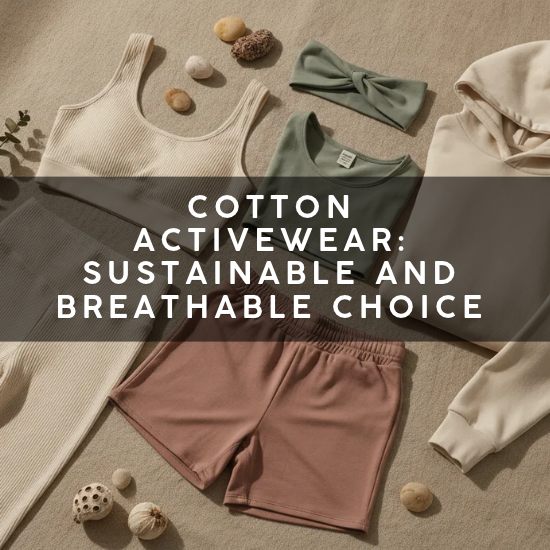
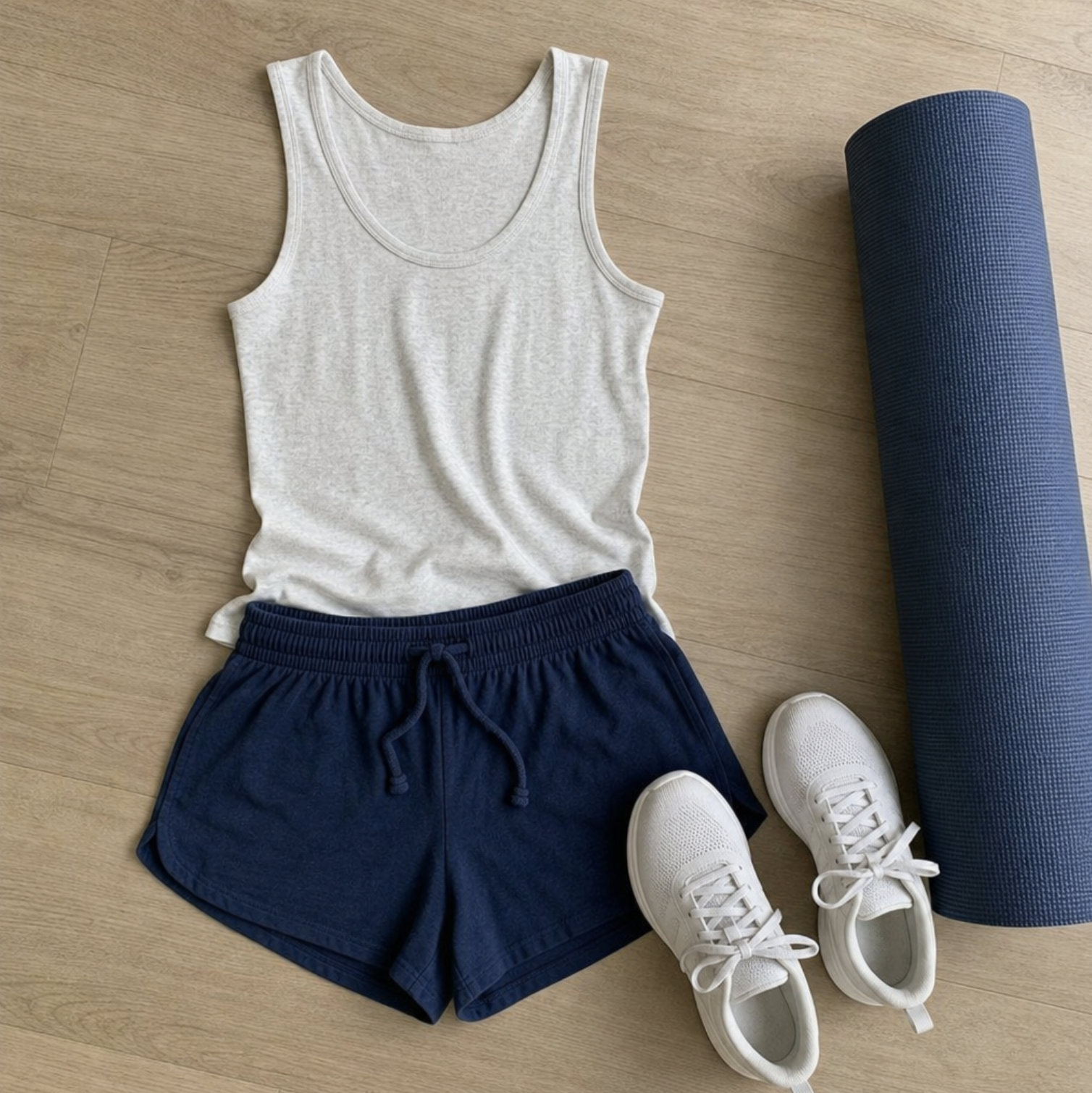
- Comfortable cotton shorts: jersey or French terry styles for warm-ups, lifting, walking, and travel.
- Joggers and sweat sets: French terry/fleece programs positioned as warm-up and recovery.
- Layering pieces: hoodies, crews, zip-ups for gym-to-street and seasonal resets.
Higher-risk categories for 100% cotton
- Soft cotton leggings positioned for sweat-heavy workouts. 100% cotton often lacks the recovery and moisture management shoppers expect in leggings. Many commercially successful cotton leggings are cotton-rich blends (e.g., cotton + elastane). If you truly need 100% cotton, align it to lounge/studio, not HIIT.
- Hot yoga / high-intensity positioning. Cotton can feel heavy and clingy once saturated. If your customer targets these activities, consider cotton-rich blends or hybrid constructions.
Assortment strategy: build a cotton capsule that makes sense for wholesale
If you are building a wholesale range around 100% cotton workout clothes, a practical structure is:
- Core tops program: 24 silhouettes (tee, tank, long sleeve, crop) in 610 colors.
- Bottoms support program: 12 shorts + 1 jogger (and avoid forcing leggings into a 100% cotton story unless a customer requests it).
- Seasonal layer program: 1 hoodie + 1 crew.
- Merchandising story: Natural fiber activewear, cotton gym wear, recovery sets, everyday training.
This structure supports both in-season fashion drops and reorderable basics-which is what most retail and brand programs need from supplier partners.
Fabric and construction: what to specify (not just 100% cotton)
100% cotton is not a complete spec. For bulk programs, you’ll want to lock the variables that control hand-feel, shrinkage, pilling, and consistency.
Common cotton fabric options for active styles
- Single jersey (typical tees): widely used; watch pilling and torque if quality is low.
- Interlock (smoother, more stable): better opacity and structure; higher cost.
- French terry (shorts/joggers/hoodies): strong for cotton gym wear sets; versatile weights.
- Rib (tanks/crops): good stretch through construction, but recovery varies by yarn and knit.
Key spec points to align in a tech pack
- GSM (fabric weight): define per style and color group. Lightweight tees and heavier terry shorts will behave very differently in production.
- Yarn quality: combed vs. carded; ring-spun vs. open-end; compact yarn for smoother hand-feel (pricing will vary).
- Finish: enzyme wash, silicone softener, peaching/brushing (each impacts feel, shrinkage, and pilling).
- Dimensional stability: pre-shrunk processes, relaxed state measurements, and wash-test targets.
- Colorfastness standards: especially for deep shades (black/navy) and reactive dye lots.
Women’s cotton-active programs: what typically moves at retail
For women’s programs, customers typically want comfort, coverage, and shape stability. In 100% cotton, you can deliver those outcomes more reliably in:
- Relaxed tees and tanks with premium hand-feel
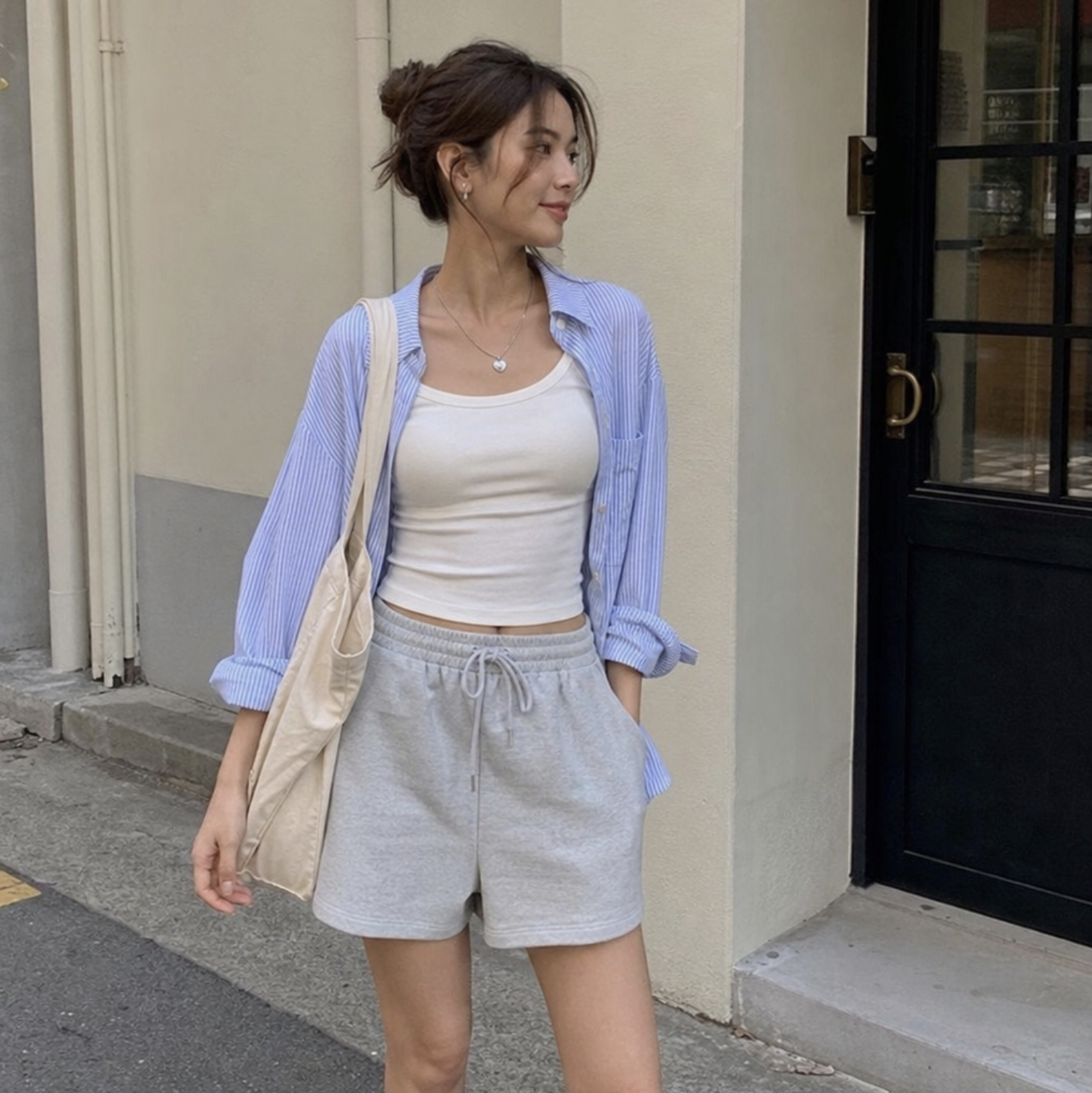
- Comfortable cotton shorts with secure waistbands and pockets
- Lightweight layers for warm-ups and travel
If a customer specifically requests 100 cotton workout clothes for women and also wants a legging look, treat it as a studio/lounge item, clarify stretch expectations up front, and use a fit approval + wash test gate before bulk.
Claims, labeling, and compliance: protect the program
Buying teams care as much about claim risk as fabric cost. Build your cotton story with documentation, not vague marketing.
- Fiber content & care labeling: ensure product labels match final BOM and production reality for U.S. sales (fiber %, country of origin, care instructions).
- Substance and safety testing: if requested, be ready with third-party test reports and a clear testing plan by material and color.
- Certification clarity: Organic, GOTS, and OEKO-TEX are different claims with different scopes. Never treat them as interchangeable.
- Marketing claim discipline: avoid performance promises (e.g., moisture-wicking) unless you can test and support them.
If you’re positioning as eco-friendly workout clothes, customers will expect traceability statements, certification numbers (where applicable), and a consistent paper trail from fiber to finished goods.
Quality risks in cotton gym wear (and how to reduce them)
Common bulk-production problems in cotton programs are predictable. Put controls in place early:
- Shrinkage and twisting: require wash test standards and measure after laundry cycles; align tolerance by size.
- Pilling: specify pilling requirements by fabric type and intended use (e.g., shorts vs. tee).
- Shade variation: lock lab dips and define acceptable delta; manage reorder dye-lot strategy.
- Hand-feel drift: finishing changes can alter softness; keep finishing recipe consistent and approved.
- Seam durability: align stitch type, SPI, reinforcement points, and seam allowances.
Sourcing checklist: questions to ask any cotton activewear supplier
Use this as a practical RFQ / vendor onboarding checklist for 100 percent cotton workout clothes programs:
- MOQ by style/color/size run: and whether mixed colors are allowed within a fabric lot.
- Lead time: sampling timeline, bulk fabric booking, production, inspection, and ex-factory.
- Fabric book options: available GSMs, knit types (jersey/interlock/terry/rib), and stock colors.
- Testing capability: what is done in-house vs. third-party; which standards are supported.
- QC process: inline checks, final inspection level, and defect handling plan.
- Compliance support: labeling, country-of-origin, packaging requirements, and documentation pack.
- Reorder continuity: ability to repeat fabric, dye, and trims across seasons.
How ZIYANG supports wholesale and private-label cotton activewear programs
ZIYANG is a premium activewear supplier focused on helping brands and retailers develop cotton-forward capsules with clear specs, consistent production, and documentation-ready claims. For customers building 100% cotton activewear or cotton-rich alternatives, ZIYANG can support:
- Private label development from tech pack to PPS approval
- Fabric selection guidance (jersey/interlock/terry/rib) aligned to target price and use-case
- Bulk consistency controls (shrinkage, shade, hand-feel)
- Production planning for seasonal drops and repeatable basics
If you want this article to include your exact capabilities (MOQs, lead times, available fabric weights, certifications, and factory audit programs), share those details and we’ll align the content to match what you can deliver in production.
Positioning and keywords that work for line sheets and wholesale pages
For wholesale pages, lookbooks, and line sheets, buying teams typically respond to simple, specific phrases that map to racks and customer needs:
- 100% cotton workout clothes for lifestyle training and studio
- Cotton gym wear sets for warm-up and recovery
- Natural fiber activewear with documented certifications
- Soft cotton leggings only if the composition and stretch expectations are clearly stated
- Eco-friendly workout clothes when supported with traceability and testing
The takeaway for buying teams
100% cotton workout clothes are having a major moment because they can be merchandised as comfortable, transparent, natural-fiber activewear-especially in tops, shorts, and warm-up layers. The winning approach is to spec precisely, avoid performance over-claims, and build an assortment that matches cotton’s strengths. When the product brief, testing plan, and documentation are aligned, cotton programs can become reliable, reorderable revenue for retailers and brand owners.