From Swatch to Bulk Production How to Develop Custom Bamboo Activewear with an OEM Partner
Developing custom bamboo activewear means turning a fabric idea into a tested, repeatable garment specification before committing to bulk production. For an activewear brand such as ZIYANG, the priorities should be clear: choose materials for the intended workout, approve fit and performance, and agree on manufacturing controls. This roadmap explains what to request from an original equipment manufacturer (OEM), with particular attention to product development and United States market requirements.
How do you choose the right bamboo fabric for activewear?
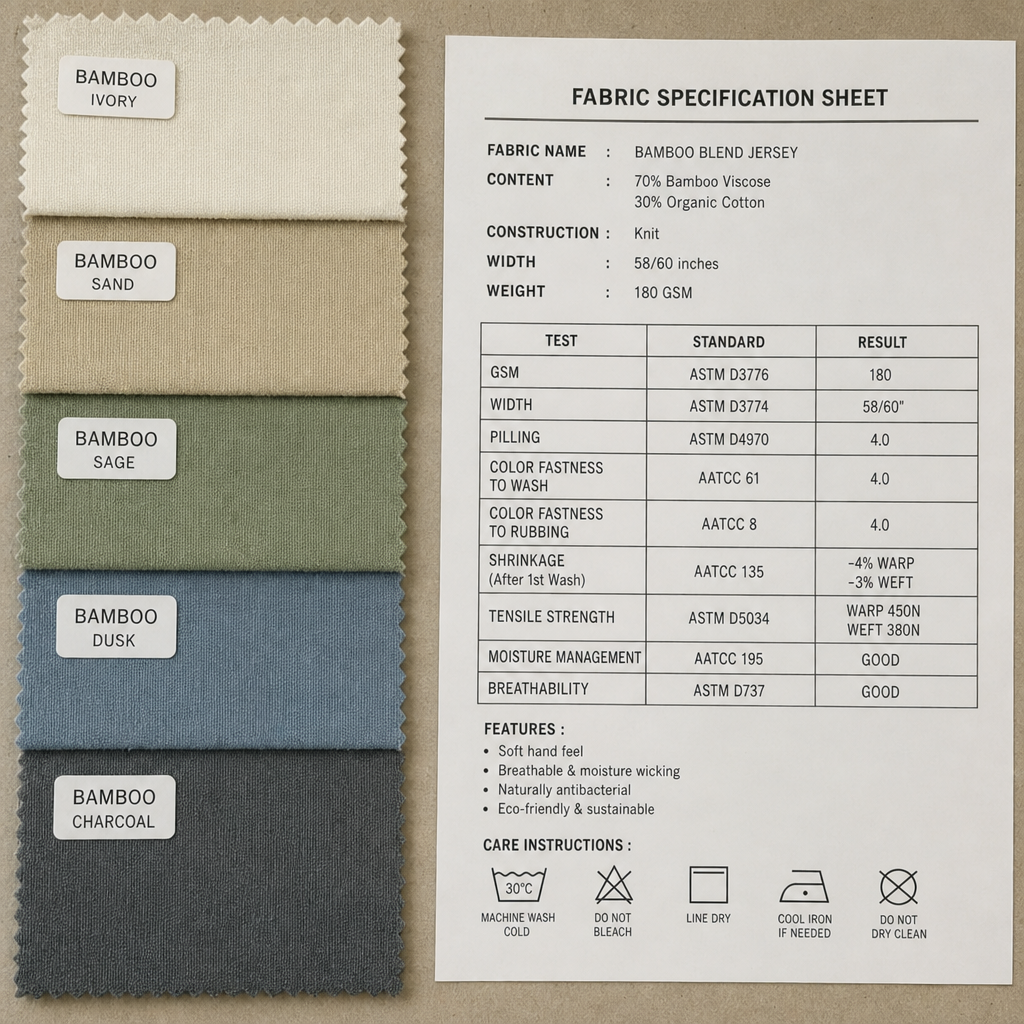
Choose fabric by its verified fiber composition and measured performance, not by the word “bamboo” on a swatch card. First establish whether the material contains mechanically processed bamboo fiber or a manufactured fiber derived from bamboo. The FTC explains that viscose and rayon refer to the same fiber type; for U.S. labeling and advertising, appropriate wording may be “rayon made from bamboo,” rather than simply “bamboo.” (ftc.gov)
Then define the garment’s job. For bamboo yoga pants intended for slower movement, prioritize comfortable stretch, coverage, and waistband stability in your evaluation. For bamboo leggings intended for demanding training, ask the development team to demonstrate recovery, abrasion resistance, and moisture-management performance rather than assuming the material will deliver them.
Build a swatch comparison sheet with these requirements:
- Composition: Request exact fiber percentages and supporting supplier documentation, including the stretch component.
- Fabric weight: Specify grams per square meter, an agreed tolerance, and the desired coverage when stretched.
- Construction: Record the knit structure and compare its surface, thickness, and feel against your design brief.
- Stretch and recovery: Ask for lengthwise and crosswise results, including the method used and residual growth after stretching.
- Care performance: Agree on washing conditions and acceptable changes in dimensions, appearance, and fit.
Textile testing programs include dimensional stability, pilling, abrasion, and colorfastness assessments. Ask your laboratory which methods suit the fabric and end use, then put the agreed pass criteria into the specification. A report without an acceptance threshold should not be your only approval tool. (intertek.com)
Turn the design idea into a production brief
Before requesting samples, prepare a technical pack that describes what the factory must make. Include front and back drawings, measurement points, size grading, seam details, waistband construction, pocket dimensions, and trim references. Attach the selected fabric specification rather than relying on a photograph or a supplier’s fabric nickname.
For custom fitness gear, describe movement requirements alongside appearance. Instead of writing “comfortable waistband,” ask evaluators to check whether it folds, rolls, or slips during squats and seated stretches. For pockets, specify the intended contents and include a movement check with those items inside.
Treat personalized activewear details as part of development, not an afterthought. Ask the OEM to propose suitable printing, embroidery, transfer, or label options for the selected material. Require a decorated sample and evaluate placement, stretch, surface feel, and appearance after the agreed care cycle before approval.
Keep every change in one revision-controlled document. Give each version a date and identifier, and ask the factory to acknowledge the current version. Do not leave a revised waistband measurement buried in a message thread while the technical pack still shows the previous number.
What should happen between the first swatch and bulk production?
Use an approval-based workflow: confirm the fabric, develop the prototype, correct fit, verify sizes and performance, and approve a production-representative sample before authorizing bulk cutting. Make each stage dependent on a written decision. This gives both the brand and OEM a shared record of what is approved and what still needs work.
- Review fabric and color. Compare swatches against the specification, then approve the relevant color submission. Keep a physical reference rather than relying only on screen images.
- Evaluate the first prototype. Review silhouette, construction, seam placement, and access to pockets. Separate design changes from manufacturing defects in your feedback.
- Run fit and wear sessions. Ask testers across the intended size range to perform relevant movements. Record waistband movement, pressure points, coverage, and post-wear measurements.
- Review revised and size-set samples. Confirm that corrections have been applied and evaluate the proposed grading. Do not approve every size solely from the base-size sample.
- Complete testing and decoration checks. Resolve failed results, confirm corrective action, and repeat affected checks before moving forward.
- Approve the pre-production sample. Require the intended bulk fabric, trims, labels, decoration, and packaging. Sign and retain the approved reference, with a matching copy for the factory.
For bamboo workout clothes, combine practical wear sessions with laboratory evidence. Intertek’s performance-testing framework includes stretch and recovery, dimensional stability, and colorfastness checks; use your laboratory’s advice to select an appropriate program. Wear feedback should complement those results, not replace them. (cdn.intertek.com)
What determines MOQ, price, and turnaround time?
Request project-specific minimum order quantities (MOQs), itemized prices, and a milestone schedule rather than budgeting around an advertised starting figure. Ask the OEM to separate garment minimums from fabric, color, print, and trim minimums. Also confirm whether quantities can be shared across sizes or styles; do not assume a small swatch order establishes the minimum for finished garments.
Use the same specification when comparing quotations. Ask each supplier to identify sampling charges, pattern development, testing, decoration, labeling, packaging, inspection, and freight separately. Request alternative quantities so you can assess the total inventory commitment, not just the lowest unit price.
For a first bamboo sportswear collection, consider narrowing the initial style and color range rather than weakening the specification. Ask whether an existing fabric can meet the brief before commissioning a new development. Approve any substitution through the same sampling and testing process.
Build the schedule backward from the date stock must reach your warehouse. Request separate allowances for material sourcing, sample revisions, testing, production, inspection, transport, and customs handling. Put approval deadlines and responsibility for delays in writing, including what happens if a sample or test fails.
Make sustainability claims specific and verifiable
Do not treat a bamboo source as proof that the finished garment is sustainable. The FTC cautions that processing bamboo into rayon changes the material and that environmental or antibacterial claims require reliable substantiation. For a proposed eco-friendly activewear range, request evidence about sourcing and processing before drafting broad environmental promises. (consumer.ftc.gov)
If a supplier proposes the phrase “organic bamboo clothing,” ask exactly what is certified, which organization issued the certificate, and whether its scope supports the finished-product claim. Do not assume a feedstock description proves that the resulting textile is organic. Under FTC guidance, sellers remain responsible for substantiating the claims they make. (ftc.gov)
OEKO-TEX STANDARD 100 concerns testing textiles for harmful substances; treat it as evidence within that scope, not as proof of every sustainability claim. Verify the certificate’s validity and covered article before using certification language. Keep supporting documents alongside the relevant fabric and garment records. (oeko-tex.com)
For sustainable fitness apparel, prefer precise, supportable statements over sweeping labels. Describe the verified composition and the specific certification that applies. Leave unsupported claims about biodegradability, sensitive-skin suitability, or natural antibacterial performance out of product copy. (ftc.gov)
Control bulk quality and prepare for the U.S. market
Before bulk production, agree on incoming-material checks, in-process reviews, and final inspection criteria. Define measurement tolerances, defect categories, inspection responsibilities, and the response to nonconforming goods. Require written approval before any fabric, trim, or construction substitution.
Use a release checklist before shipment:
- Compare bulk garments with the signed sample and current technical pack.
- Review measurements, seams, decoration, shade consistency, and packaging.
- Confirm test reports correspond to the relevant production materials.
- Reconcile quantities, size breakdowns, carton markings, and shipping documents.
For United States sales, most covered textile products need labels identifying fiber content, country of origin, and the responsible business. Clothing also generally requires care instructions. Review the applicable requirements before approving labels, packaging, and online descriptions; use qualified compliance support where needed. (ftc.gov)
Build a repeatable product, not just an attractive sample
For ZIYANG, the strongest development brief should connect the intended workout to measurable requirements, documented approvals, and a controlled bulk order. Keep the first launch focused, resolve failures before production, and retain approved samples for reorder comparisons. Start the OEM conversation with a clear specification and an evidence checklist—not just a request for a price.